Aspire MCP, EF Core, AI App Context
Coverage includes Web Forms migration, CQRS tradeoffs, API versioning, Azure Key Vault, C# 13 locking, and structured LLM outputs for .NET teams.
Jasen's top three picks
- 1 Improve your AI coding agent with runtime context from Aspire MCP
Tim Deschryver
A smart extension of AI-assisted coding: give the agent runtime truth, not just source files, and the quality of analysis improves fast.
- 2 GROUP BY in GraphQL for .NET
Medium
Interesting if you work with Hot Chocolate and need aggregation without punting everything to bespoke endpoints.
- 3 What's one mistake devs make when building cost-efficient AI apps?
YouTube
Short, but the point is right: better context usually beats endless model tinkering on cost and outcomes.
Editor's note
I kept this one deliberately mixed, which is usually when the strongest practical reads show up. Tim Deschryver’s piece on feeding Aspire MCP runtime context into AI tooling stands out because it moves past code-only assistance, and the EF Core pair on ExecuteUpdateAsync plus common performance mistakes is useful production-minded material. I also liked the Web Forms to .NET 10 migration article for being concrete about incremental modernization instead of pretending rewrites are easy.
Today's articles
Improve your AI coding agent with runtime context from Aspire MCP
Tim Deschryver
The power of giving an AI agent access to OpenTelemetry data through Aspire MCP is simple: it gives the agent better input to analyze. Instead of reasoning only from source code, the agent can inspect...
Topics: .NET Aspire OpenAI OpenTelemetry
Read article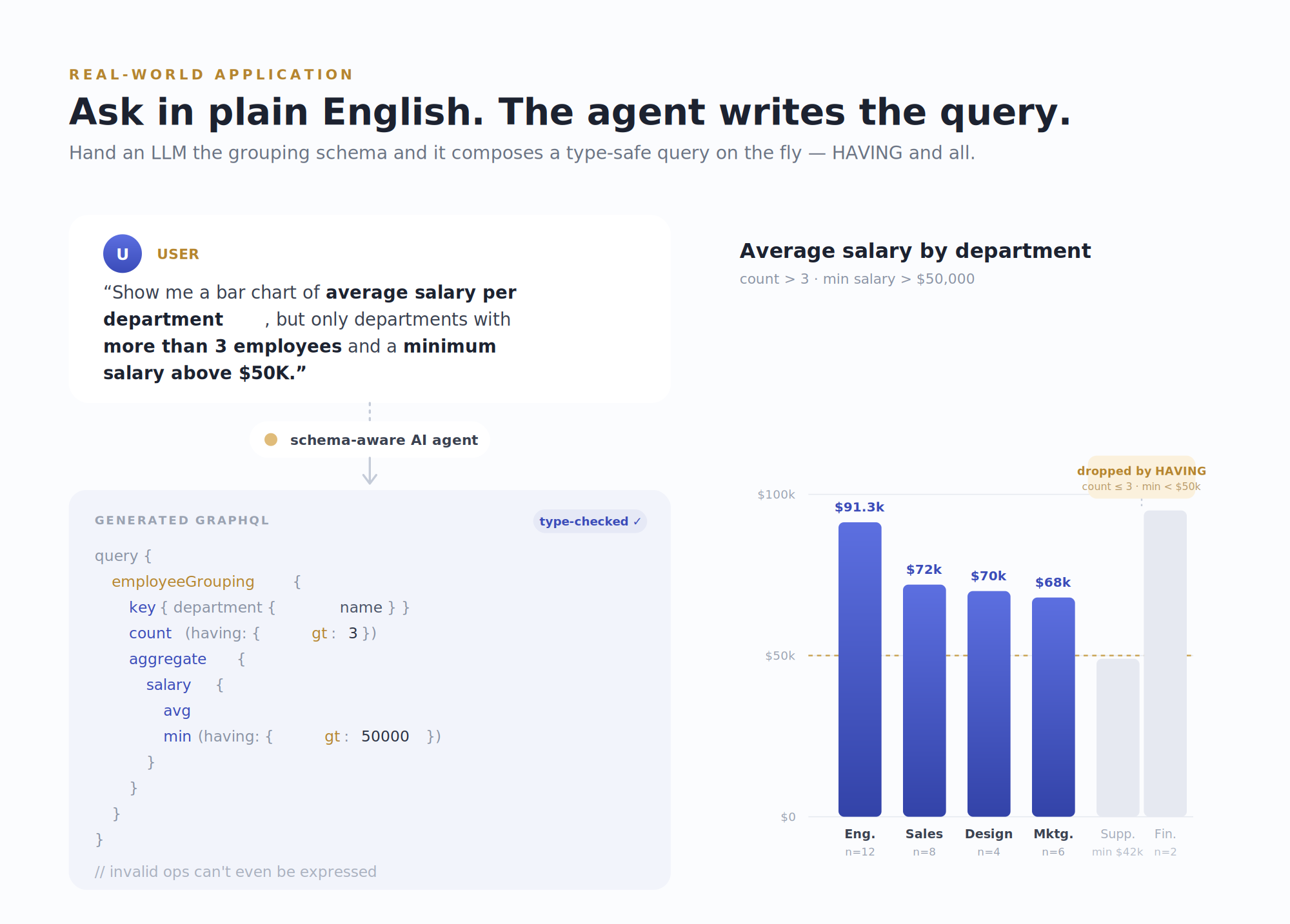
GROUP BY in GraphQL for .NET
Medium
If you’re building a GraphQL API in .NET, you’ve almost certainly run into HotChocolate — the de-facto GraphQL server for the platform.
Topics: ASP.NET Core Web API
Read article
What's one mistake devs make when building cost-efficient AI apps?
YouTube
Most devs over‑optimize the model 🤖 The real leverage is in the system 🔧 Tweaking prompts & swapping models ≠ better outcomes Giving AI the right data + context = better reasoning + results Build th...
Topics: OpenAI
Read article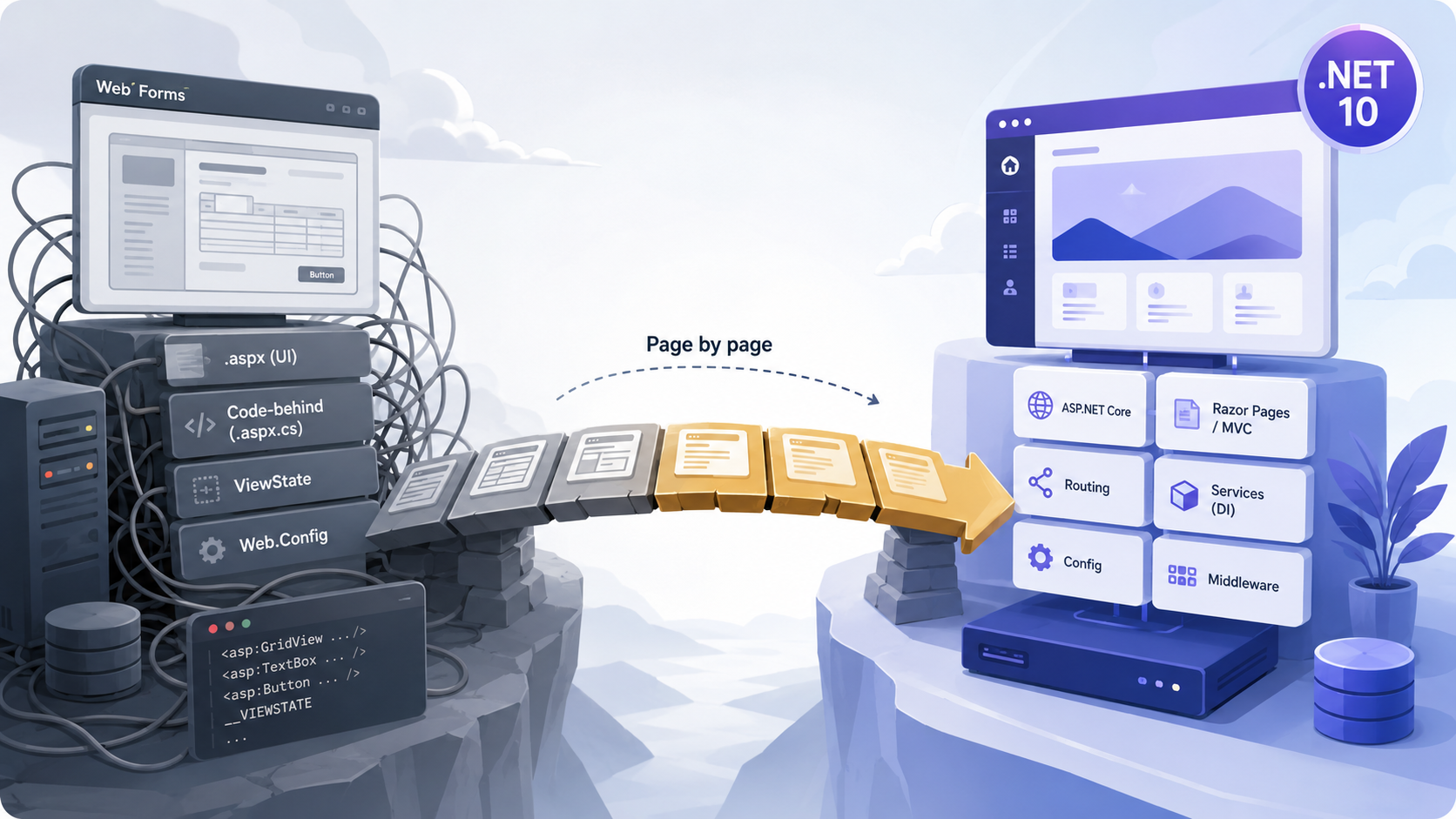
How to migrate ASP.NET Web Forms to .NET 10 without a big rewrite
Medium
Why “just change the target framework” was never a plan and the page-by-page approach that actually ships
Topics: ASP.NET Core .NET 10 .NET Framework
Read article
Secure Secrets Management in .NET Applications Using Azure Key Vault
C# Corner
Securely manage .NET application secrets with Azure Key Vault. Learn integration, best practices, and why it's crucial for cloud-native security.
Read article
CQRS in ASP.NET Core: Practical Scenarios Where It Actually Makes Sense
C# Corner
Explore CQRS in ASP.NET Core: understand its benefits, when it truly makes sense, and avoid overengineering simple applications.
Topics: ASP.NET Core CQRS
Read article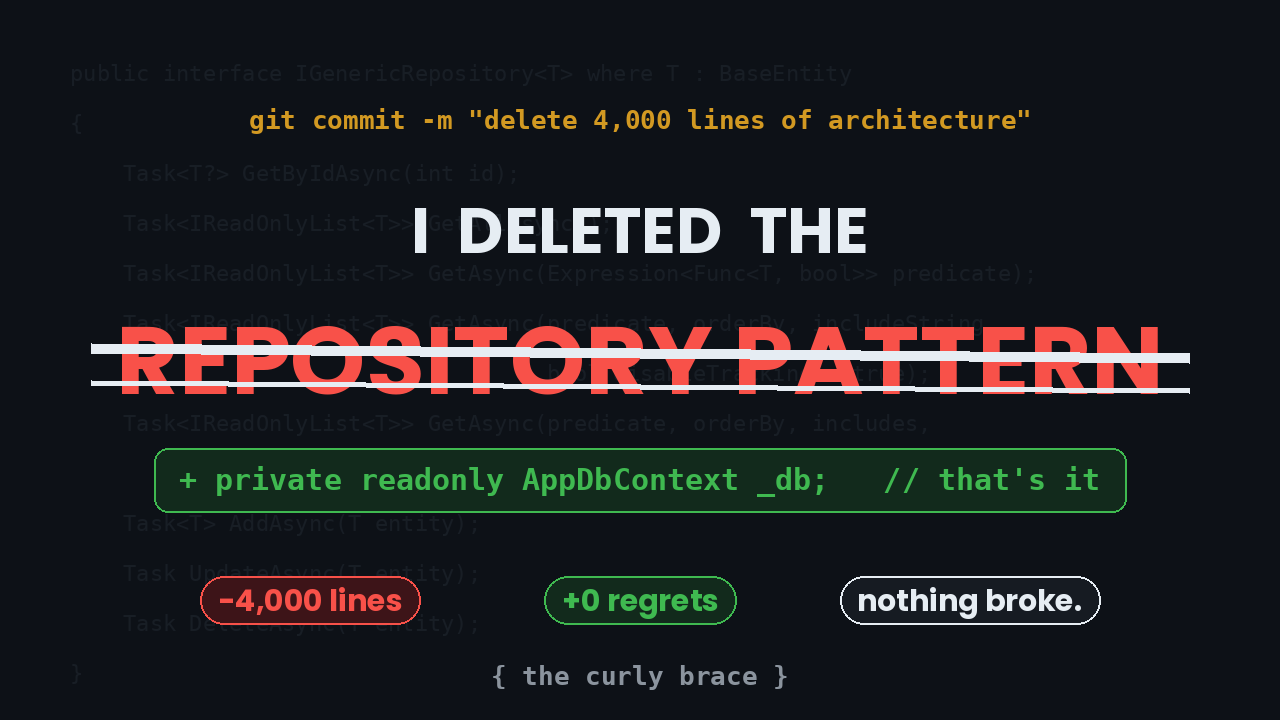
I Deleted the Repository Pattern From Our Codebase. Here’s What Happened.
Medium
Six months later, nobody asked for it back. (And our tests finally catch real bugs.)
Topics: Design Patterns EF Core
Read article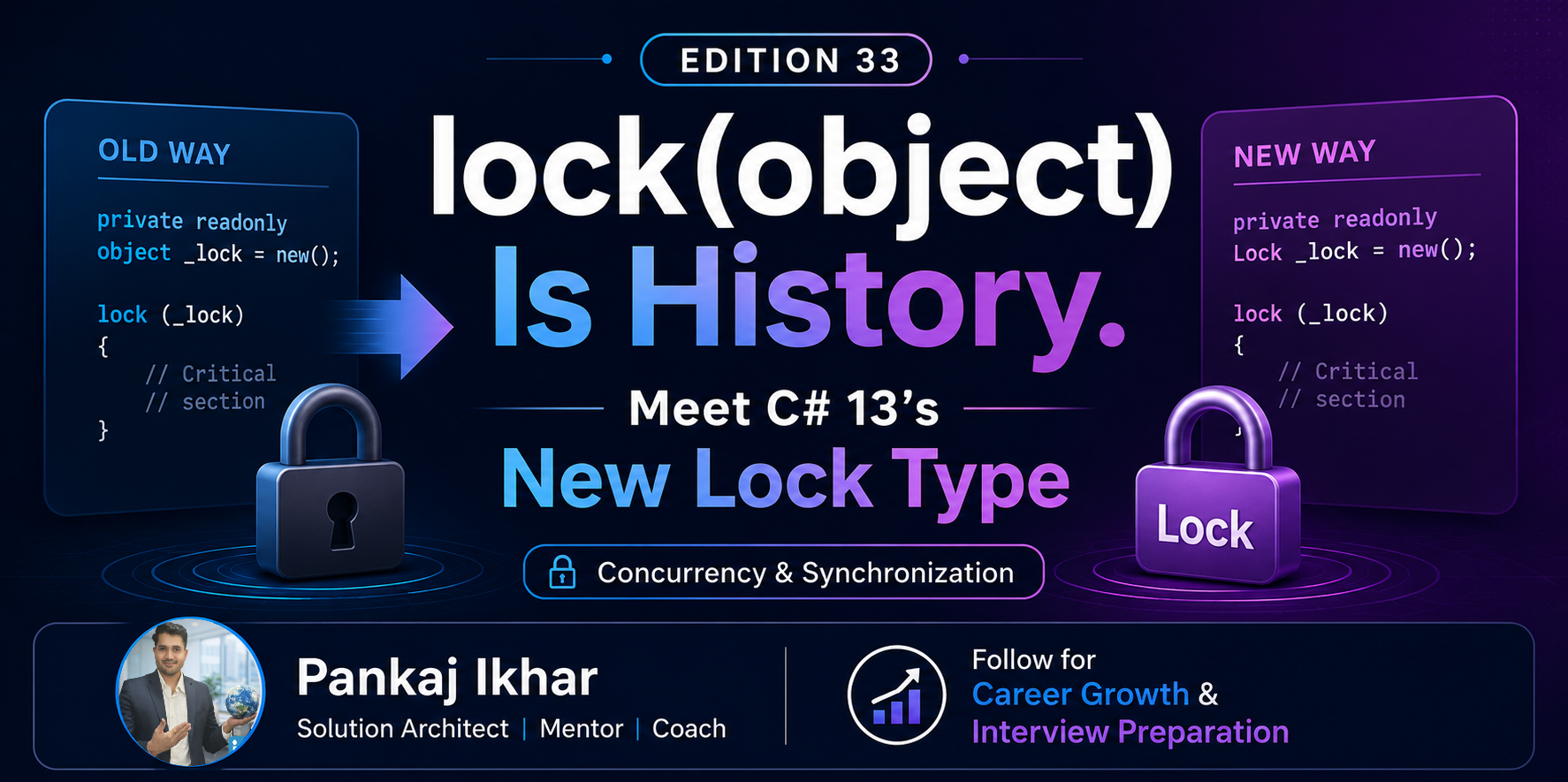
Lock in C# 13 — Replacing lock(obj) with Something Better
Medium
We have used lock(object) for nearly 20 years. C# 13 doesn’t remove it. It just gives us something more intentional to reach for instead.
Topics: C#
Read article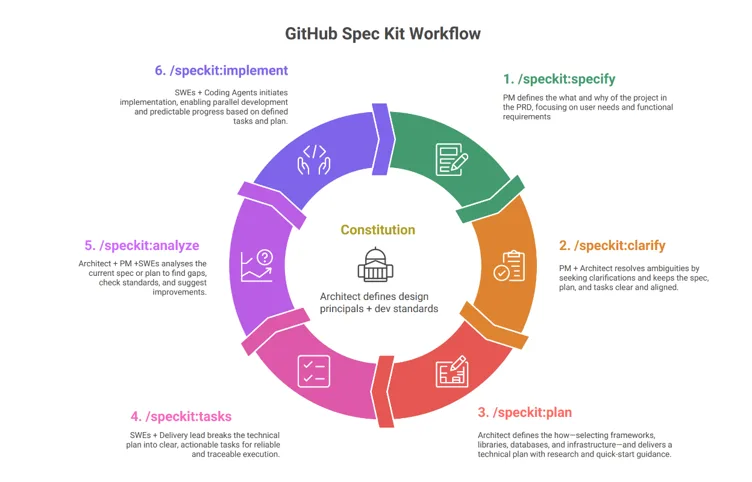
Spec-Driven Development: A Spec-First Approach to AI-Native Engineering
Microsoft Developer
AI has made software delivery faster, but speed alone does not guarantee better outcomes. As teams adopt AI-native development, the real challenge is keeping requirements, design, implementation, and ...
Topics: OpenAI
Read article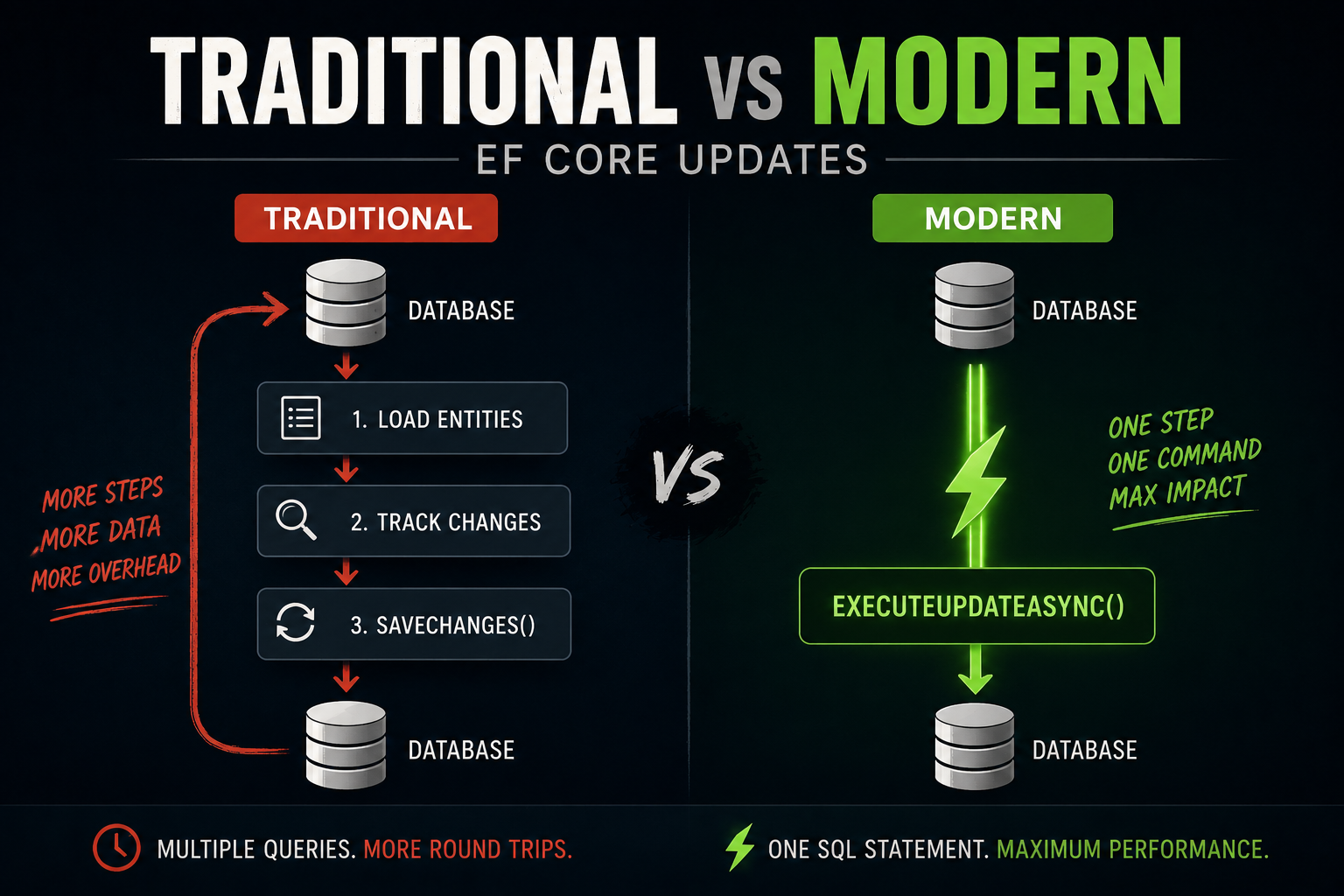
Why ExecuteUpdateAsync() Is One of EF Core's Best Features?
Medium
Most EF Core update statements look like this:
Topics: EF Core Performance
Read article
10 EF Core Performance Mistakes (and How to Fix Them) in .NET 10
codewithmukesh
10 EF Core performance mistakes that ship to production - N+1 queries, missing projections, lazy loading, AsNoTracking, bulk ops - and how to fix each in .NET 10.
Topics: .NET 10 EF Core Performance
Read article
From RAG to Agentic RAG: Building Self-Improving AI Applications in .NET
C# Corner
Learn how Agentic RAG extends traditional Retrieval-Augmented Generation by combining AI agents, reasoning, planning, and tool usage to build intelligent self-improving AI applications in .NET.
Topics: OpenAI Semantic Kernel
Read articleBuilding Context-Aware Enterprise Search Applications with ASP.NET Core
C# Corner
Build intelligent, context-aware enterprise search with ASP.NET Core, vector databases, and AI for enhanced productivity and knowledge discovery.
Topics: ASP.NET Core OpenAI
Read article
Build Game UI Without the Pain: Gum Layout Tool for .NET | .NET Game Development
YouTube
Game UI layout in .NET is more painful than it needs to be. Gum is an open source layout tool built specifically for games that works with MonoGame, FlatRedBall, raylib, and more (including Skia-based...
Topics: .NET Core
Read article
Context Engineering for AI Applications: Beyond Prompt Engineering
C# Corner
Learn how context engineering goes beyond prompt engineering by optimizing retrieval, memory, tool outputs, and information pipelines for enterprise AI applications in .NET.
Topics: OpenAI
Read articleThe Ultimate Guide to Observability and Resiliency in ASP.NET Core
C# Corner
Master ASP.NET Core observability & resiliency with structured logging, middleware, global exception handling, and Serilog for rapid production issue resolution.
Topics: ASP.NET Core OpenTelemetry Serilog
Read article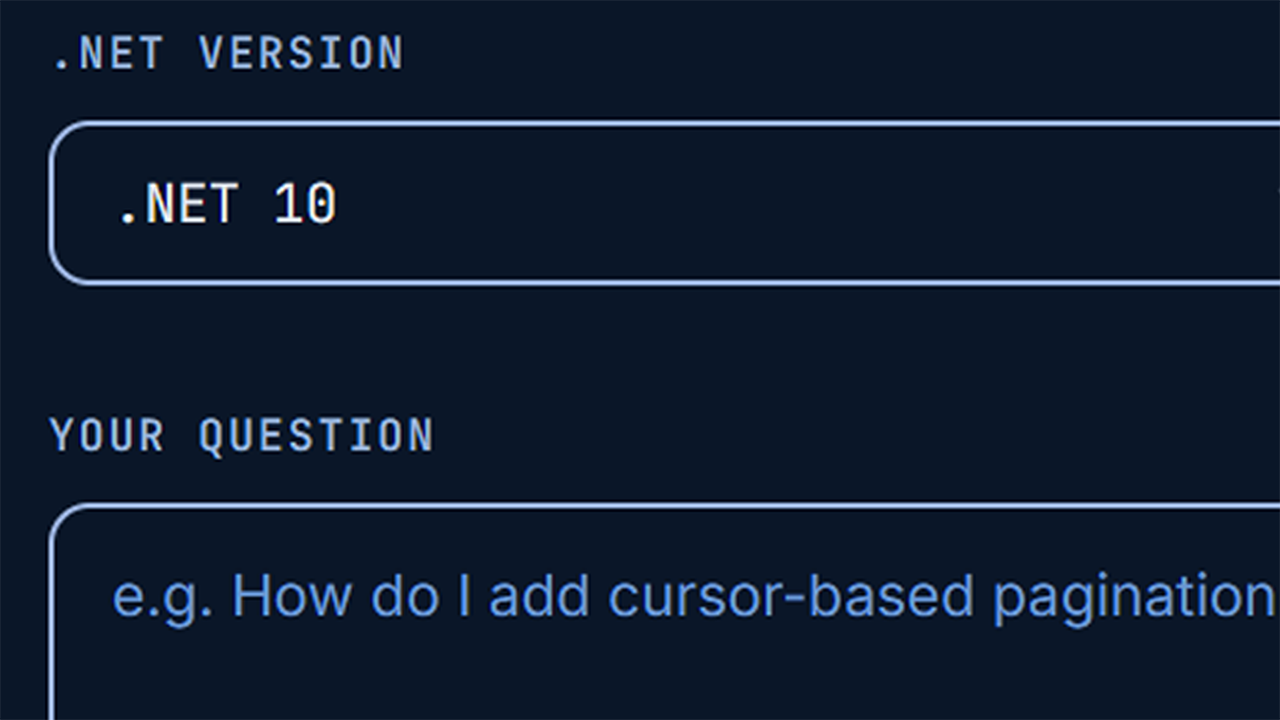
We built an AI tool for .NET/C# developers in 2 days
Round The Code
We built an AI tool for .NET and C# developers in just 2 days using Claude's API. Here's how we did it, the prompts we used, and how you can try it now. The page We built an AI tool for .NET/C# develo...
Topics: OpenAI
Read article
API Versioning Should Be Your Last Resort
Milan's .NET Weekly
Most teams reach for v2 too early because they don't have a contract evolution strategy. Here's the API change management approach I prefer: evolve contracts safely, deprecate deliberately, and versio...
Read article
Microsoft Extends Rust-Influenced Memory-Safety Push to C# - Visual Studio Magazine
""charp" OR "asp.net" OR "fsharp" OR "c#" OR "vb.net" " - Google News
PENDING REVIEW: MICROSOFT ARTICLE UNRETRIEVABLE (INSUFFICIENT FULL TEXT). Microsoft Extends Rust-Influenced Memory-Safety Push to C# Visual Studio Magazine
Topics: C# Visual Studio
Read article
Structured Outputs in LLM Applications: A Complete C# Developer Guide
C# Corner
Learn how to implement structured outputs in C# AI applications. Discover schema validation, strongly typed models, JSON responses, and best practices for building reliable enterprise LLM solutions.
Topics: C# OpenAI System.Text.Json
Read article