ai
OpenAI for .NET Developers Articles, Tutorials & News
OpenAI for .NET Developers articles, tutorials, and news from the DotNetNews archive.
644 articles Updated
OpenAI .NET is the focus of this topic page. OpenAI for .NET Developers is a recurring focus for C# and .NET developers working in the Microsoft ecosystem. Intermediate and senior .NET developers use this hub to scan practical writing without treating every link as an endorsement.
Recurring subtopics in recent issues include OpenAI .NET, OpenAI C#, Azure OpenAI .NET, and ChatGPT .NET. Those themes are drawn from titles and excerpts in the newest archive entries for this tag, not from a marketing outline.
Expect publisher tutorials, release notes, architecture write-ups, and field notes linked from DotNetNews issues. Start here is a short editorial shortlist for OpenAI for .NET Developers; the archive list is chronological and larger. Secondary angles such as OpenAI .NET and OpenAI C# appear when the archive actually covered them. Nearby reading often overlaps with Microsoft Semantic Kernel and ML.NET.
Each card points at the original publisher URL and the DotNetNews issue that carried it, so you can read the article in context or jump straight to the source.
Start here
Editor picks for OpenAI
-

Building AI-Powered Applications with OpenAI Responses API and .NET
C# Corner Issue #503
Responses API coverage is timely, especially for developers comparing newer OpenAI integration patterns with older chat-centric approaches.
-

Full-Stack AI Applications with Next.js, ASP.NET Core, and OpenAI
C# Corner Issue #502
Broad full-stack walkthrough for teams pairing ASP.NET Core backends with OpenAI features.
-

The Story of My OpenAI .NET Contribution
Medium Issue #501
Always nice to see contribution stories that demystify getting involved in a real SDK.
-
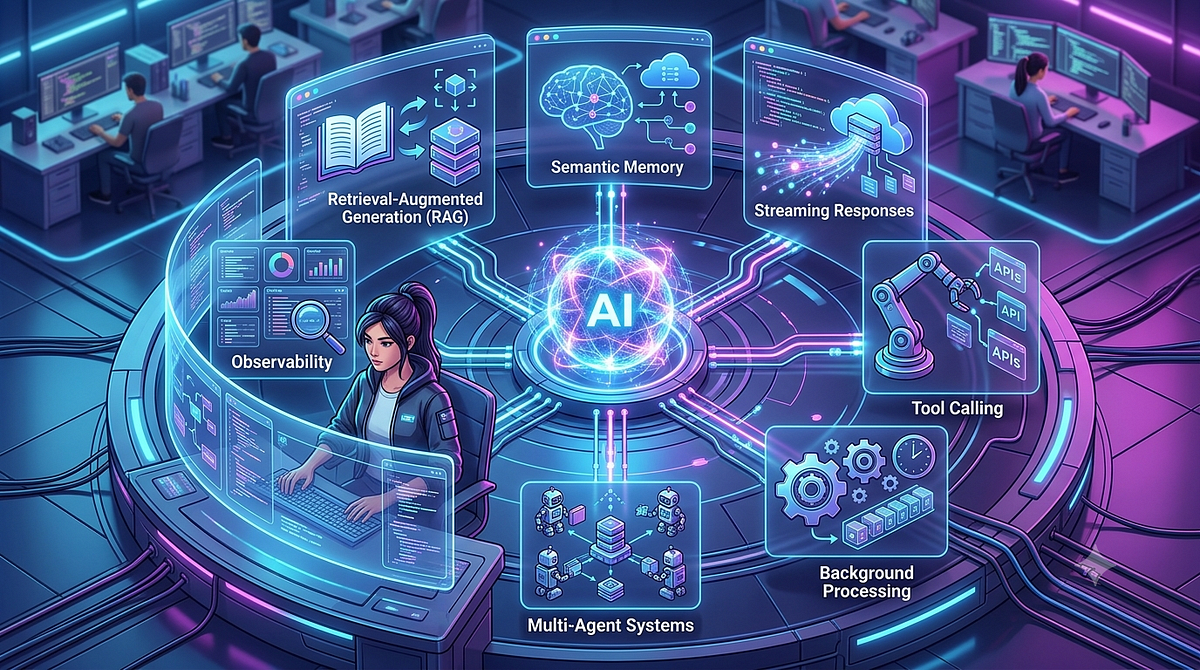
7 AI Engineering Patterns Every .NET Developer Should Know (With Practical Examples)
blog.gopenai.com Issue #493
These patterns matter more than model hype. Reliability and system design are where most AI app success or failure really lives.
-

Beyond the Chatbot: Demystifying AI Agent Loops, Harnesses, and LLMOps for .NET Developers
Medium Issue #488
Useful framing for developers moving beyond simple prompt-response apps.
-
Zero To First Agent (Azure OpenAI)
""charp" OR "asp.net" OR "fsharp" OR "c#" OR "vb.net" " - Google News Issue #450
A practical on-ramp for building an Azure OpenAI agent in C#, especially useful if you want framework context instead of abstract AI talk.
-
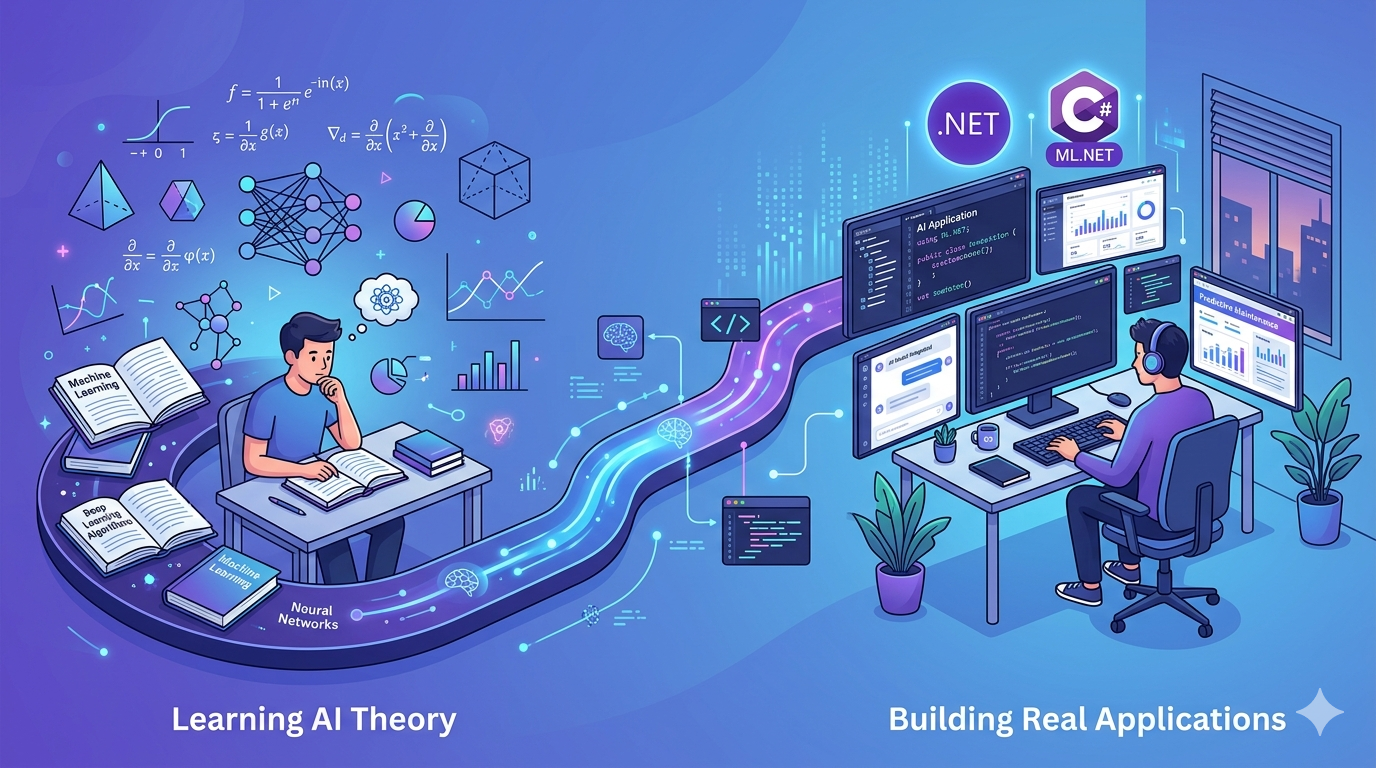
Generative AI for Beginners in .NET 10: From Curiosity to Real Applications
blog.gopenai.com Issue #426
A few years ago, learning AI meant diving into complex theory, research papers, and tools that often felt disconnected from real-world… Continue reading on GoPenAI ».
-

One Line of C#. Every AI Provider.
Medium Issue #418
A one-line AI gateway for every provider is the kind of abstraction teams reach for when they want to swap models without rewriting app code.
Archive
Page 1 of 26
Newest first
-
My Eval Suite Was Lying to Me: Auditing the Judge, Not Just the Agent
Medium - Ali Süleyman TOPUZ Issue #558
I need to admit something first. For about six weeks this summer, I ran an LLM-as-judge eval suite against an agent I maintain, watched…
-
Harness, Framework, or SDK: I Audited My Own Agent Stack Against a Real Source-Code Study
Medium - Ali Süleyman TOPUZ Issue #558
A source-code study of eleven coding agents gave me a vocabulary I didn’t know I was missing. So I turned it on my own projects.
-

How to Build Agentic UIs With Blazor AI Components
C# Corner - Nidhi Sharma Issue #558
-

What’s new in Microsoft Agent Framework: Interactive experiences, memory, and resilient execution
Microsoft Dev Blogs - Dan Taylor Issue #554
An agent that answers a question is a starting point. An agent that completes useful work needs more: an interface users can interact with, memory beyond the current conversation, an appropriate envir...
-
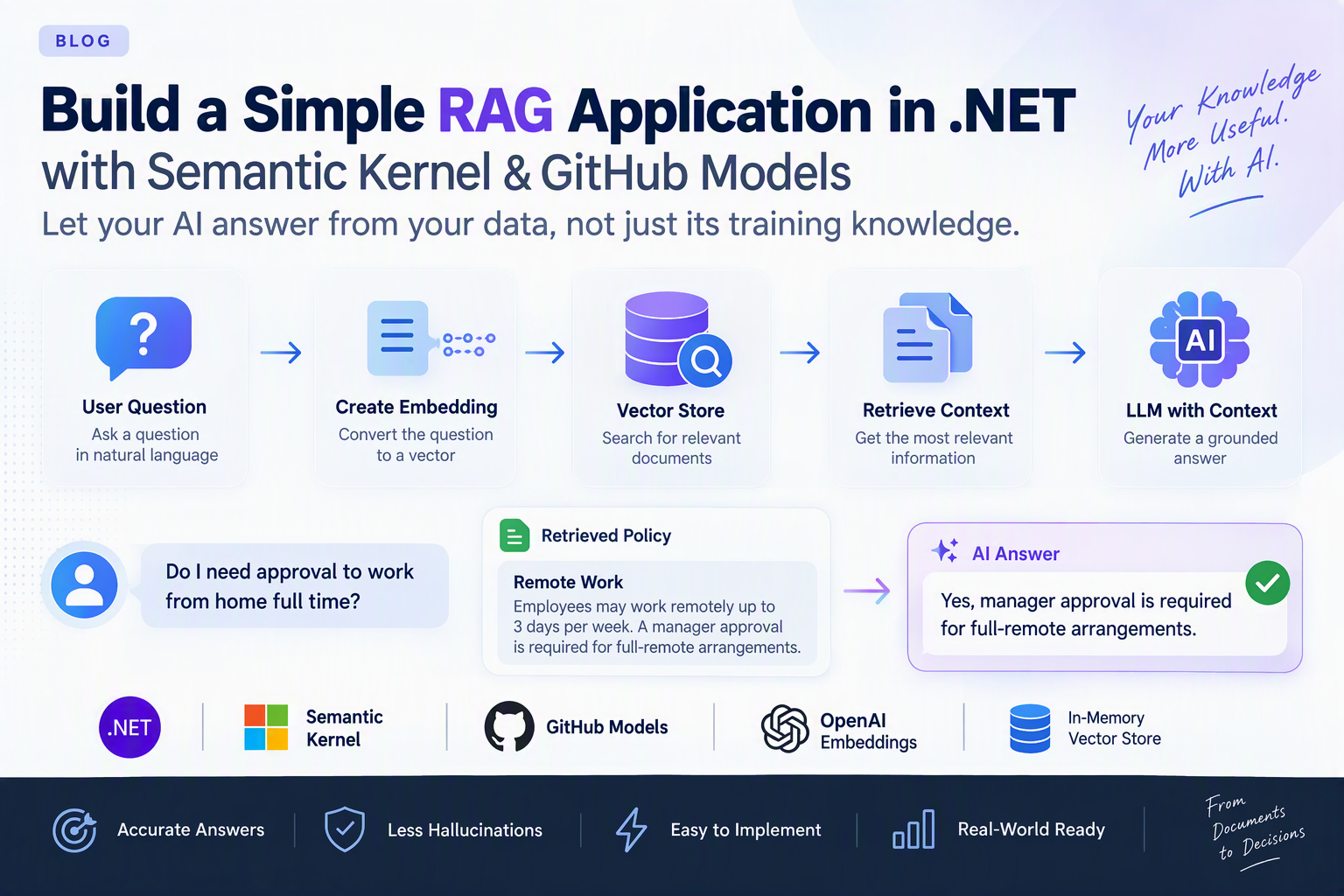
Build a Simple RAG Application in .NET with Semantic Kernel
Medium - Rushik Lakhatariya Issue #554
Large Language Models are powerful, but they can only answer based on what they know. What if you want them to answer using your company’s…
-
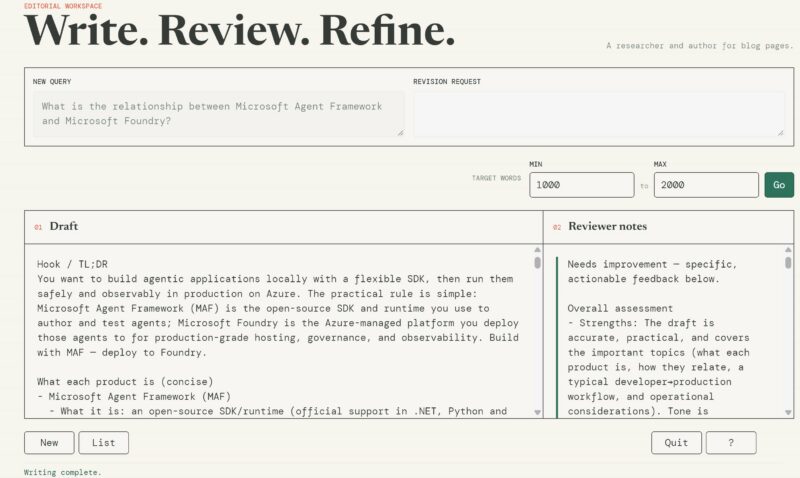
BlogWriter Goes Open-Source
YapCast – Jesse Liberty Issue #554
Today I formally opened up my demo program BlogWriter as an open-source program. To do so, I added an MIT license and began taking contributions. Really that was about all there was to it, but it felt...
-
Your Agent’s Memory Is Probably Wrong: A Practical Guide to Agentic Memory Design
Medium - Ali Süleyman TOPUZ Issue #554
I built a memory layer, watched it rot, watched it get poisoned, and rebuilt it as four layers instead of one
-

Memory in BlogWriter
YapCast – Jesse Liberty Issue #554
BlogWriter uses the Responses API which can help with state maintenance. BlogWriter, however, implements important state (context) using a session object, and manages long-term memory by writing to a ...
-
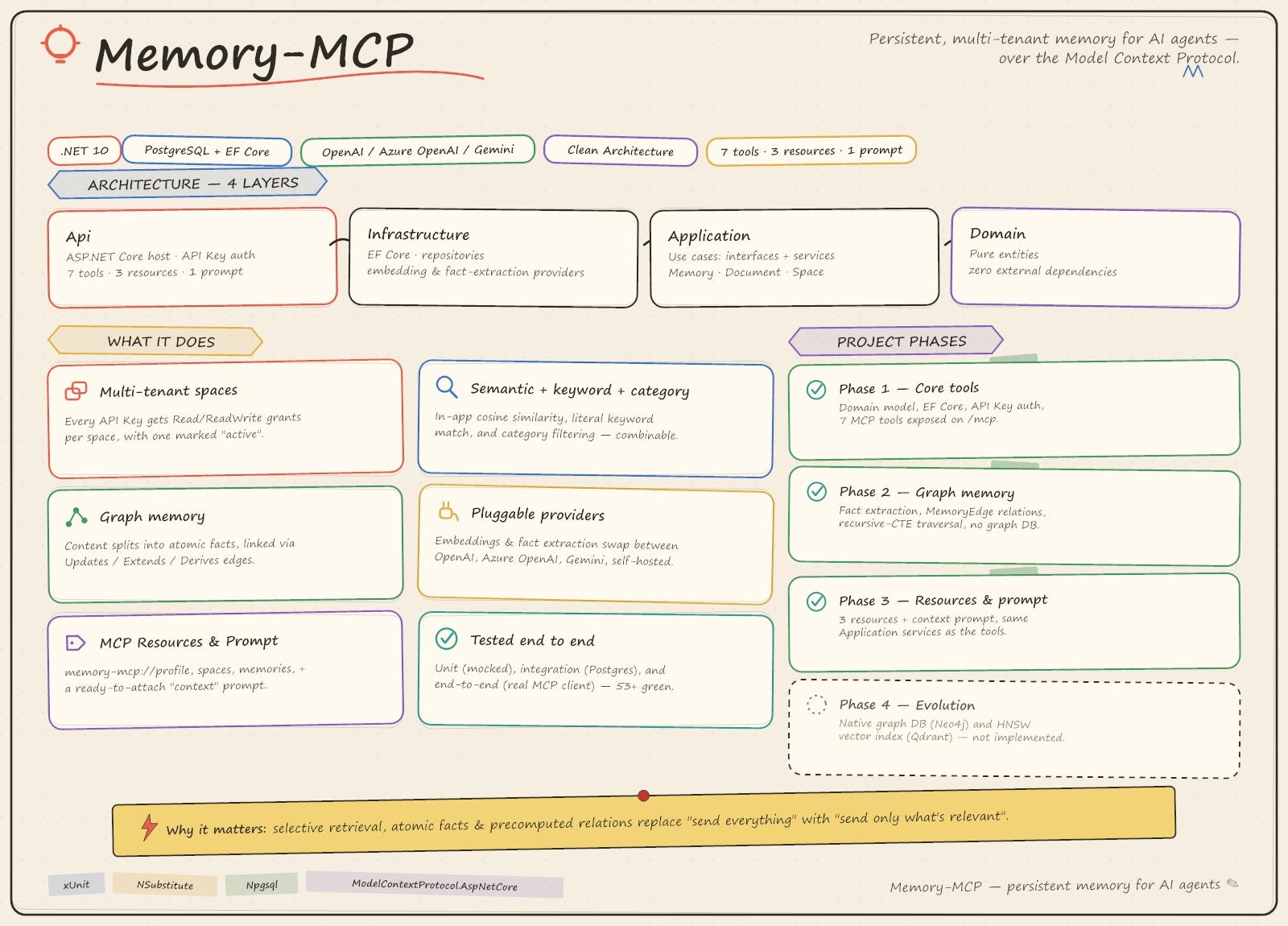
Memory-MCP: Extracting Text from PDFs Without Breaking Reading Order with PdfPig
Medium - ENTANGO Issue #553
The easy part of handling a PDF in an AI memory pipeline is opening the file. The hard part is getting text an LLM can actually reason…
-

From Chatbots to Automated Agents: Routines in Microsoft Foundry Are Now Generally Available
Microsoft Dev Blogs - Linda Li Issue #553
Agents are rapidly evolving beyond chat. The first generation of agents waited for a person to send a message. Today, organizations want agents that can monitor work, respond to business events, and c...
-
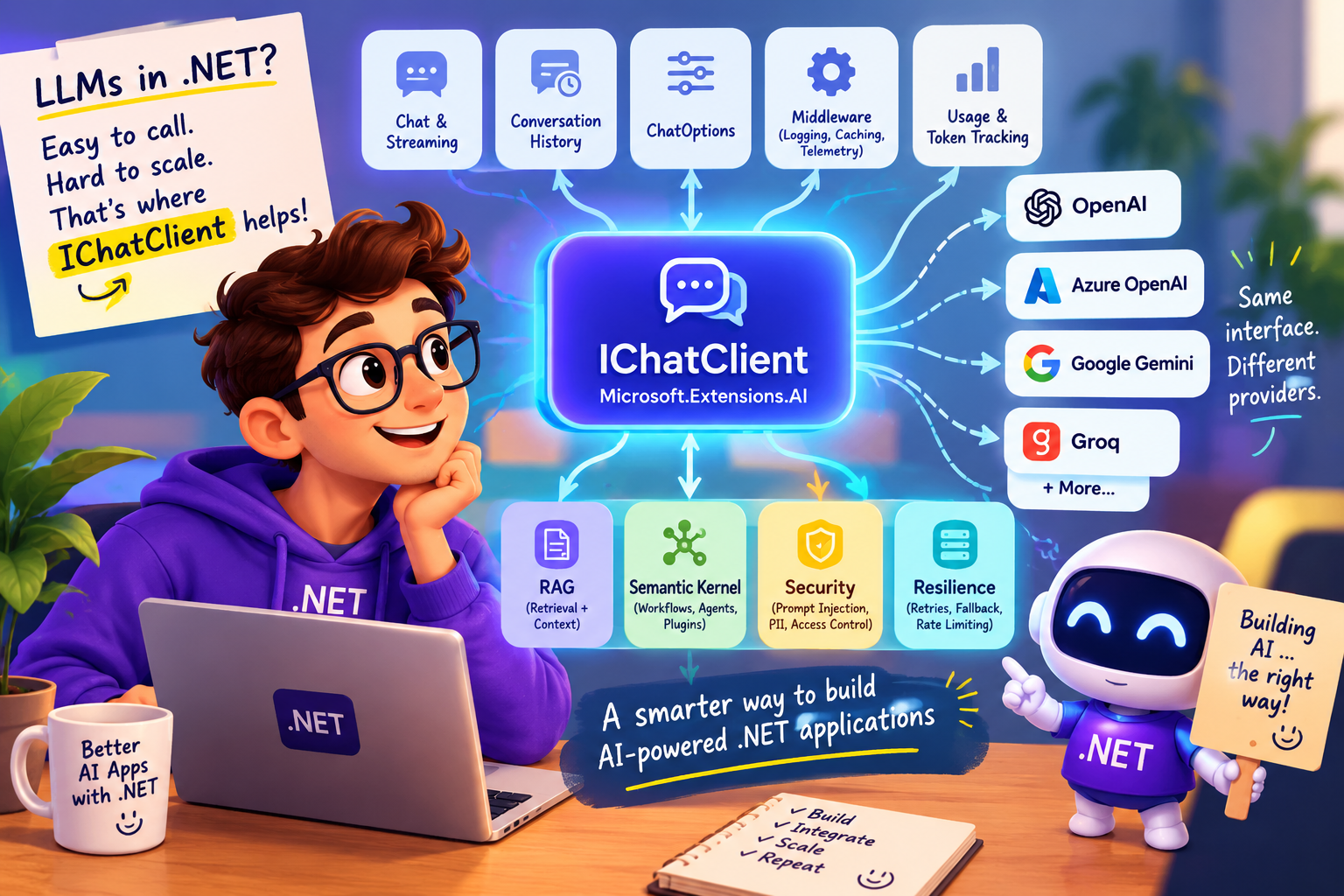
Calling LLMs from .NET with IChatClient: From Simple Prompts to Production Architecture
Medium - Chaudhariparesh Issue #553
Calling an LLM from a .NET application is easy.
-
.NET + AI in Production: What Actually Works (A Field Survey)
Medium - Ali Süleyman TOPUZ Issue #553
Five write-ups, one week, and the patterns that kept showing up when the hype was stripped out
-
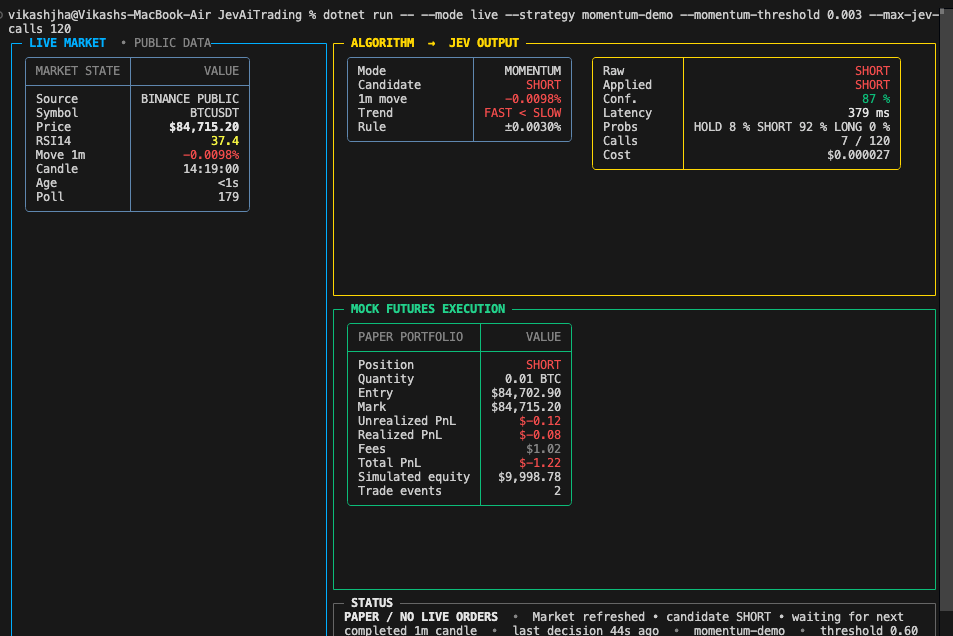
JEV Is Disrupting the Boring Part of AI Agents.
Medium - Vikash Jha Issue #553
Not a profitable trading bot. Not high-frequency trading. A small experiment in what happens when an AI is allowed to decide — but not…
-
.NET + Foundry, better together
YouTube - dotnet Issue #552
What can you build with .NET and Microsoft Foundry? Let’s find out together! Join us for a series of practical explorations featuring new SDK capabilities, cool projects, and the latest Foundry featur...
-

Running Microsoft Agent Framework Locally
YapCast – Jesse Liberty Issue #552
Run a full Microsoft Agent Framework (MAF) agent entirely on-device to eliminate round trips to the cloud, reduce latency, avoid egress costs, and keep sensitive data private. With Foundry Local you c...
-
ChatClient v ResponsesClient in Microsoft Agent Framework
YapCast – Jesse Liberty Issue #552
TL;DRUse the Responses client for new projects if you want the newest, richest hosted tools and structured outputs; use the Chat Completion client when you need maximum backward compatibility or are c...
-
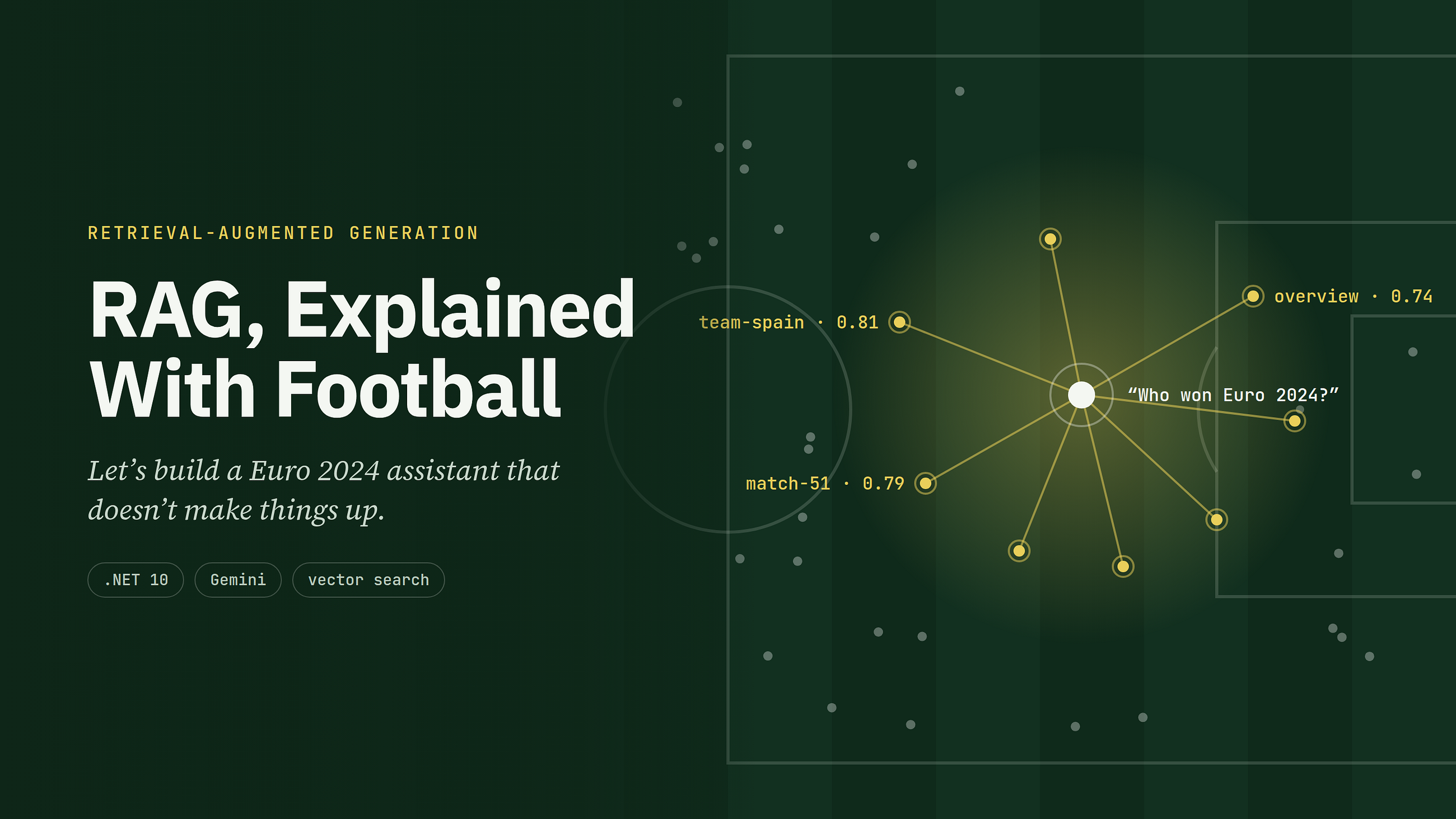
RAG, Explained With Football: Let’s Build a Euro 2024 Assistant That Doesn’t Make Things Up
Medium - Alparslan Parlak Issue #552
A friendly, step-by-step guide to Retrieval-Augmented Generation with .NET, Gemini and a CSV full of match stats
-
State, Memory, and the Two Camps Fighting Over What Your Agent Should Remember
Medium - Ali Süleyman TOPUZ Issue #552
I built the same memory system twice, once for a project with three people and once for a codebase eleven teams touch, and I’m no longer…
-
Agentic RAG and chat completion in the Microsoft SQL engine | Data Exposed
YouTube - Microsoft Developer Issue #550
Learn how you can use various capabilities within Microsoft SQL (SQL Server, Azure SQL, SQL DB in Fabric) to do things like chat completion, and integrate with Microsoft Foundry, Gateway, and Teams. ✅...
-
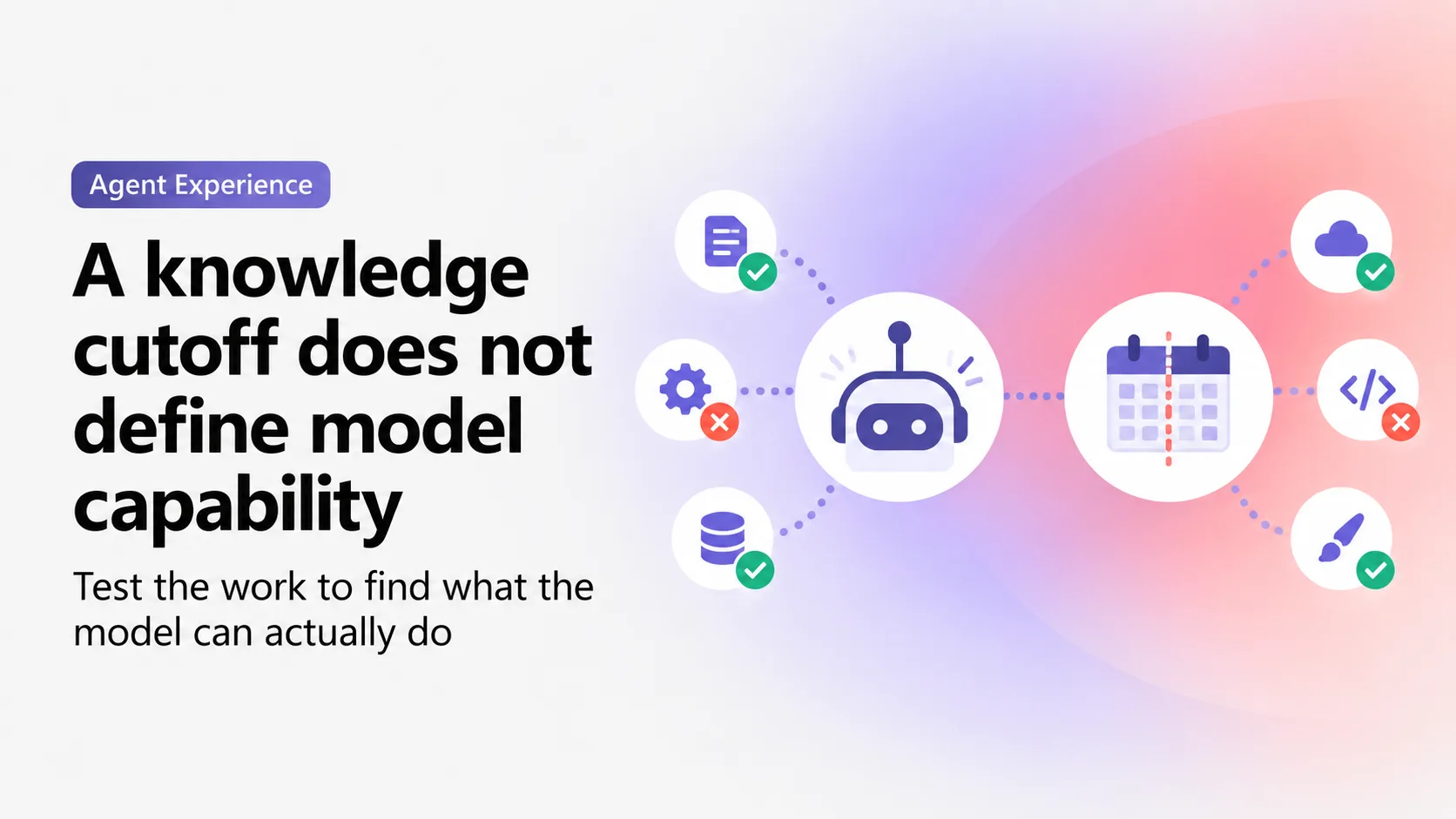
Knowledge cutoff is a poor proxy for model capability
Microsoft Developer - Waldek Mastykarz Issue #550
A model can fail on features released before its knowledge cutoff, then succeed on ones released after it. We tested hundreds of product changes and found that the date tells you far less than the wor...
-
Prompts Are Consumables, Evals Are Capital: Rethinking What Actually Survives a Model Upgrade
blog.gopenai.com Issue #549
I spent most of last year treating my CLAUDE.md file like it was source code. Every time an agent did something dumb, I patched the prompt… Continue reading on GoPenAI »
-
Building a RAG Application with .NET 10 and OpenAI
Medium Issue #546
A practical, step-by-step introduction to embeddings, vector similarity, retrieval, and grounded LLM responses using C# and .NET 10.
-
MCP Live!
YouTube Issue #544
The Model Context Protocol (MCP) is the open standard for connecting AI models to tools and data. This half-day event covers MCP end to end: its role as an open standard, how it's adopted across the d...
-
What's new in Microsoft Foundry: July and August 2026
Microsoft Dev Blogs Issue #544
Microsoft Foundry's July and August 2026 updates make Hosted Agents, Voice Live integration, and Toolboxes generally available; expand Claude tools hosted on Azure; update Model Router's regions and m...