Native AOT, AI APIs, and EF Core Performance
This issue spans LINQ execution, Aspire job resilience, NSwag client sync, .NET 11 previews, DDD, event sourcing, and database tuning.
Jasen's top three picks
- 1 Why .ToList() Changes Everything in Your LINQ Queries
Medium
A good refresher on deferred execution and how one innocent materialization call can change behavior, memory use, and database round-trips.
- 2 Native AOT vs JIT Compilation in .NET 11: Performance Benchmarks and Trade-Offs
C# Corner
Worth reading for teams evaluating deployment shape, cold start behavior, and the real cost of giving up some runtime flexibility.
- 3 Building a Self-Healing Background Job System with .NET Aspire
C# Corner
Aspire continues to show up in operational scenarios, and this one focuses on the resilience plumbing many background workers still lack.
Editor's note
I kept this one intentionally mixed, which is how I like the newsletter to read day to day. The Native AOT vs JIT benchmark piece is useful because it gets past slogans and into startup, memory, and trade-off territory, while the NSwag client generation article is the kind of practical integration safeguard teams can apply immediately. I also liked seeing solid architectural discussion here, especially the rich aggregates piece and the event sourcing reality check.
Today's articles

Why .ToList() Changes Everything in Your LINQ Queries
Medium
If you are working with C# and .NET, you probably use LINQ every day. You drop a .ToList() at the end of your query to fix a type mismatch…
Topics: C# Performance
Read article
Native AOT vs JIT Compilation in .NET 11: Performance Benchmarks and Trade-Offs
C# Corner
Compare .NET 11 Native AOT vs JIT compilation. Explore performance benchmarks, startup time, memory usage, and trade-offs for cloud-native apps.
Topics: AOT Native AOT Performance
Read article
Building a Self-Healing Background Job System with .NET Aspire
C# Corner
Build resilient, self-healing background job systems with .NET Aspire. Learn to implement retries, health checks, and observability for reliable applications.
Topics: .NET Aspire .NET Core OpenTelemetry
Read article
Building Intelligent API Discovery Portals with ASP.NET Core and Vector Search
C# Corner
Build intelligent API discovery portals with ASP.NET Core and vector search. Enhance developer productivity by enabling semantic API search.
Topics: ASP.NET Core OpenAI Web API
Read article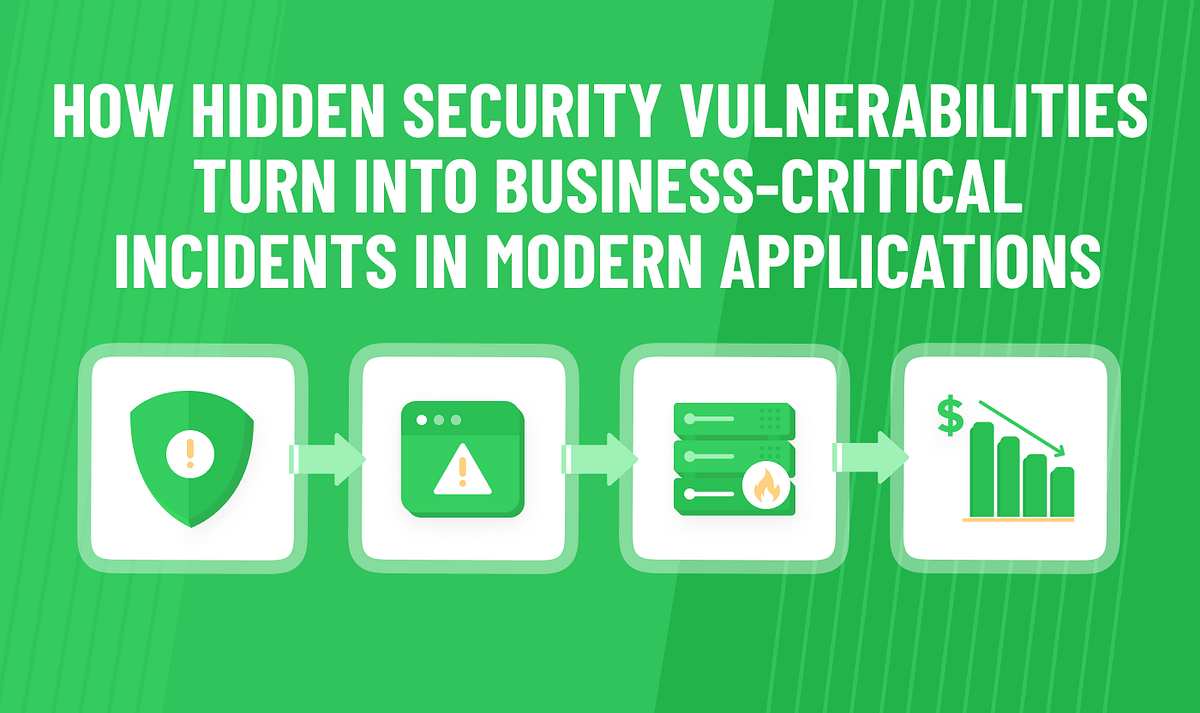
How Hidden Security Vulnerabilities Turn Into Business-Critical Incidents in Modern Applications
Medium
Security is a board-level concern. IBM’s latest breach report puts the global average cost at $4.4 million per incident ($10.22 million in… Continue reading on Emerline Tech Talk »
Topics: Authentication Security
Read article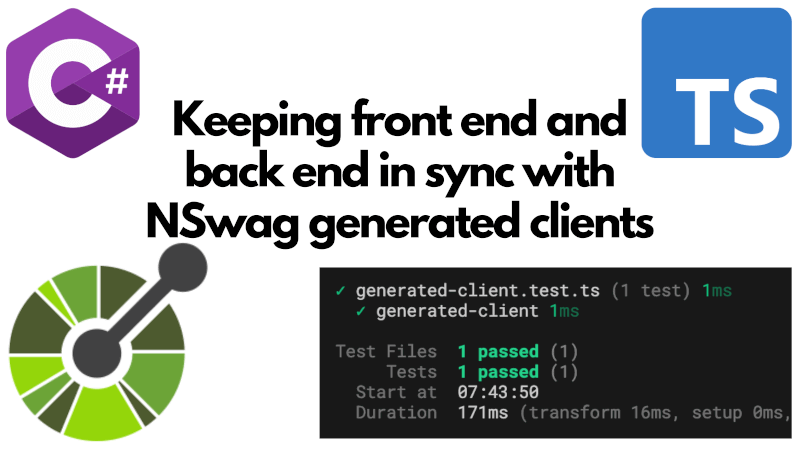
Keeping front end and back end in sync with NSwag generated clients
I CAN MAKE THIS WORK
By generating clients from OpenAPI specs, it is possible to have integration tests that check your front end and your back end are aligned. This post will show you how to do that using NSwag.
Topics: ASP.NET Core Web API
Read article
Building AI-Driven Feature Flag Optimization Systems in ASP.NET Core
C# Corner
Build AI-driven feature flag optimization in ASP.NET Core using Azure services for smarter, data-driven releases and enhanced performance.
Topics: ASP.NET Core Azure OpenAI
Read article
Migrating a Legacy Razor + JavaScript Frontend to React and TypeScript, One Component at a Time
Medium
Most articles about React migrations start from a clean, modern setup. Real enterprise apps rarely look like that. This is the story of…
Topics: ASP.NET Core ASP.NET MVC
Read article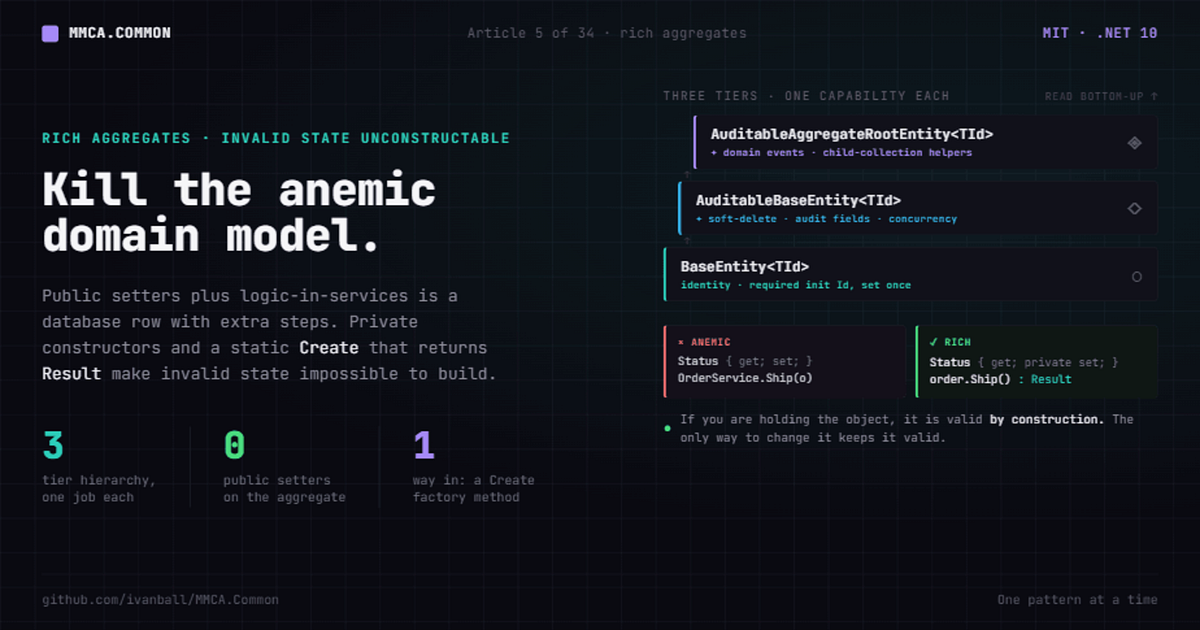
Kill the anemic domain model: rich aggregates with factory methods that return Result
Medium
Public setters plus logic-in-services is not a domain model, it is a database row with extra steps.
Topics: Domain-Driven Design Design Patterns
Read article
Bulk Operations in EF Core 10 - Benchmarking Insert, Update, and Delete Strategies
codewithmukesh
Learn how to optimize bulk insert, update, and delete operations in EF Core 10. We benchmark 5 approaches with real numbers and a decision matrix for every scenario.
Topics: Benchmarking EF Core Performance
Read article
What's New in .NET 11: Features, Performance Improvements, and Migration Guide
C# Corner
.NET 11 boosts performance, productivity & cloud-native dev with Native AOT, faster ASP.NET Core, smarter GC & improved tooling. Migrate easily!
Topics: ASP.NET Core .NET 10 Performance
Read article
.NET R&D Digest (June, 2026)
WordPress
This issue includes bits of AI, software development, C++, C#, diagnostics, architecture and of course .NET and .NET Internals.
Topics: C# Design Patterns Profiling
Read articleBuilding AI-Powered Operational Runbook Generation Systems with ASP.NET Core
C# Corner
Build AI-powered operational runbook systems with ASP.NET Core, OpenTelemetry, and Azure OpenAI for faster incident response and improved reliability.
Topics: ASP.NET Core OpenAI OpenTelemetry
Read articleBuilding AI-Powered API Usage Analytics Platforms with .NET
C# Corner
Build AI-powered API analytics with .NET, OpenTelemetry, and Azure OpenAI for actionable insights, better product decisions, and enhanced customer experiences.
Topics: OpenAI OpenTelemetry Web API
Read articleBuilding an AI-Powered Log Analysis Platform with .NET and OpenTelemetry
C# Corner
Build an AI-powered log analysis platform with .NET and OpenTelemetry to gain actionable insights, detect anomalies, and accelerate root cause analysis.
Topics: OpenAI OpenTelemetry Serilog
Read articleOn .NET Live: Building AI Archaeology Platform with .NET, Durable Workflows & Multi-Agent Systems
YouTube
Divakar Kumar introduces Archaios, an AI-powered exploration platform designed to help archaeologists analyze massive LiDAR datasets and uncover hidden historical sites. In this episode, he demonstrat...
Read article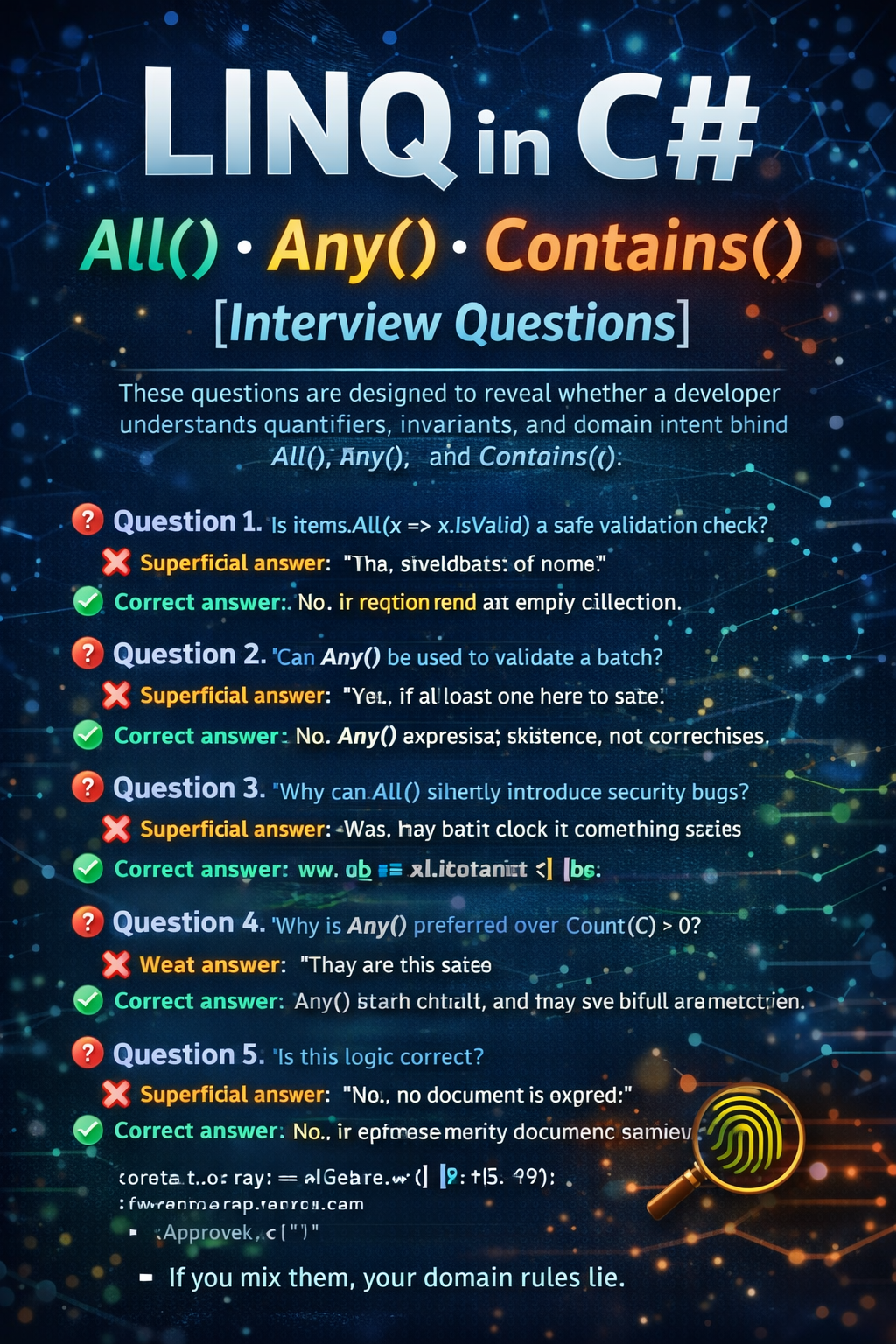
LINQ in C#: All(), Any(), and Contains() [Interview Questions]
Medium
These methods look simple, but they frequently expose gaps in understanding quantifiers, domain intent, and edge cases — especially empty…
Topics: C# Performance
Read article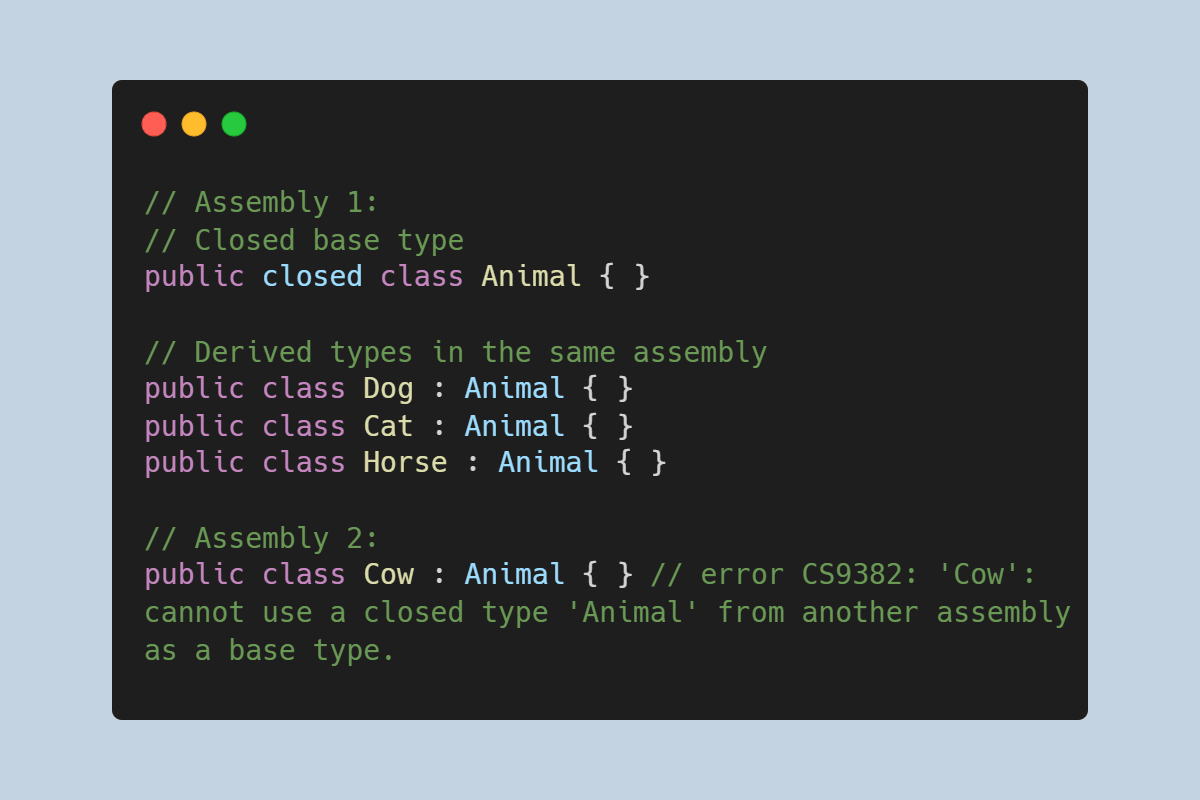
Closed class hierarchies: Exploring the .NET 11 preview - Part 4
Andrew Lock | .NET Escapades
In this post I describe what a close closed hierarchy is, how to create one, and discuss why you might want to
Read article
AI-Powered Database Schema Evolution Using Entity Framework Core
C# Corner
Enhance database schema evolution with Entity Framework Core and AI. Reduce risks, improve performance, and automate documentation for safer migrations.
Topics: EF Core OpenAI SQL Server
Read articleBuilding AI-Powered SQL Query Performance Advisors with Entity Framework Core
C# Corner
Build AI-powered SQL query advisors with Entity Framework Core to automatically detect bottlenecks, optimize performance, and boost application responsiveness.
Topics: EF Core Performance SQL Server
Read articleEvent Sourcing in .NET: When to Use It and When to Avoid It
C# Corner
Explore Event Sourcing in .NET: understand its benefits, challenges, and when to use this powerful pattern for auditability and history.
Topics: Design Patterns .NET Core Event Sourcing
Read article
Building an AI-Driven Database Query Performance Analyzer with .NET and SQL Server
C# Corner
Build an AI-driven .NET and SQL Server analyzer to boost database query performance, reduce troubleshooting time, and enhance application responsiveness.
Topics: OpenAI Performance SQL Server
Read article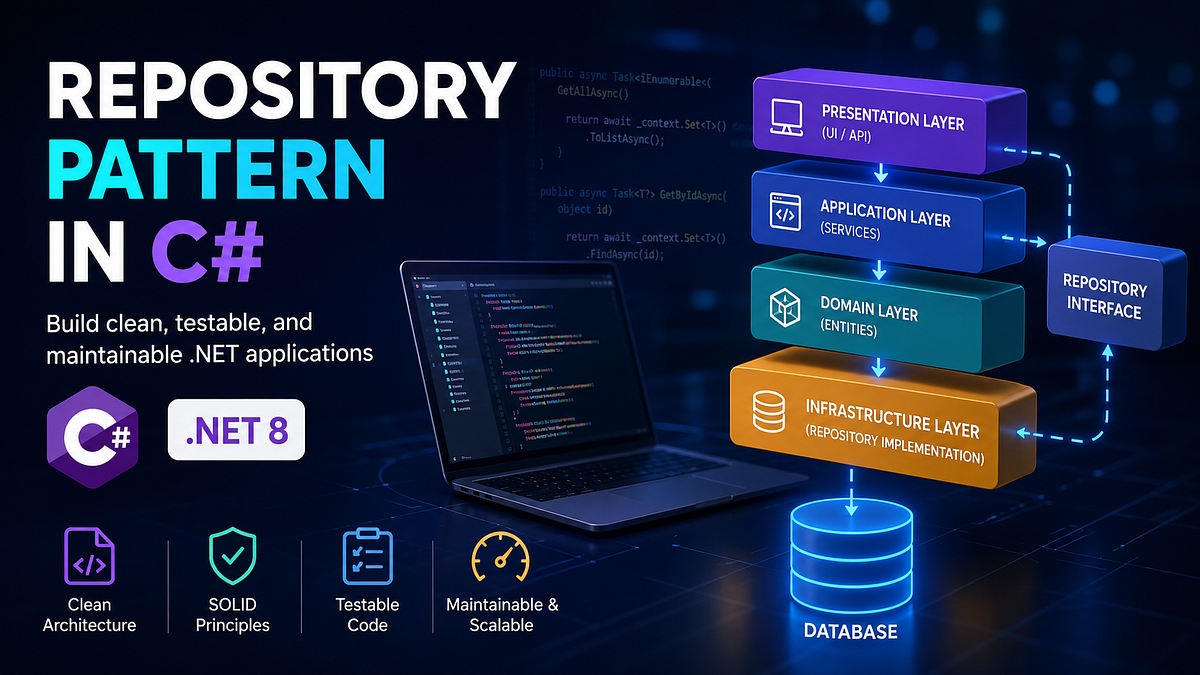
Repository Pattern in C#: Build Clean, Testable, and Maintainable .NET Applications
Medium
Learn how the Repository Pattern works in modern .NET
Topics: Clean Architecture Design Patterns Unit Testing
Read article