architecture
SOLID Principles in C# Articles, Tutorials & News
SOLID Principles in C# articles, tutorials, and news from the DotNetNews archive.
101 articles Updated
SOLID Principles in C# work shows up across many DotNetNews issues because teams keep hitting the same implementation questions. SOLID Principles in C# is a recurring focus for C# and .NET developers working in the Microsoft ecosystem.
Recurring subtopics in recent issues include SOLID principles C#, SOLID .NET, single responsibility C#, and dependency inversion C#. When a subtopic never appears in the archive titles or excerpts, it is left out of this introduction.
Expect publisher tutorials, release notes, architecture write-ups, and field notes linked from DotNetNews issues. Start here is a short editorial shortlist for SOLID Principles in C#; the archive list is chronological and larger. Secondary angles such as SOLID principles C# and SOLID .NET appear when the archive actually covered them. Cross-links to C# and .NET Design Patterns and Clean Architecture in .NET help when the problem spans more than one tag.
Each card points at the original publisher URL and the DotNetNews issue that carried it, so you can read the article in context or jump straight to the source.
Start here
Editor picks for Solid Principles
-
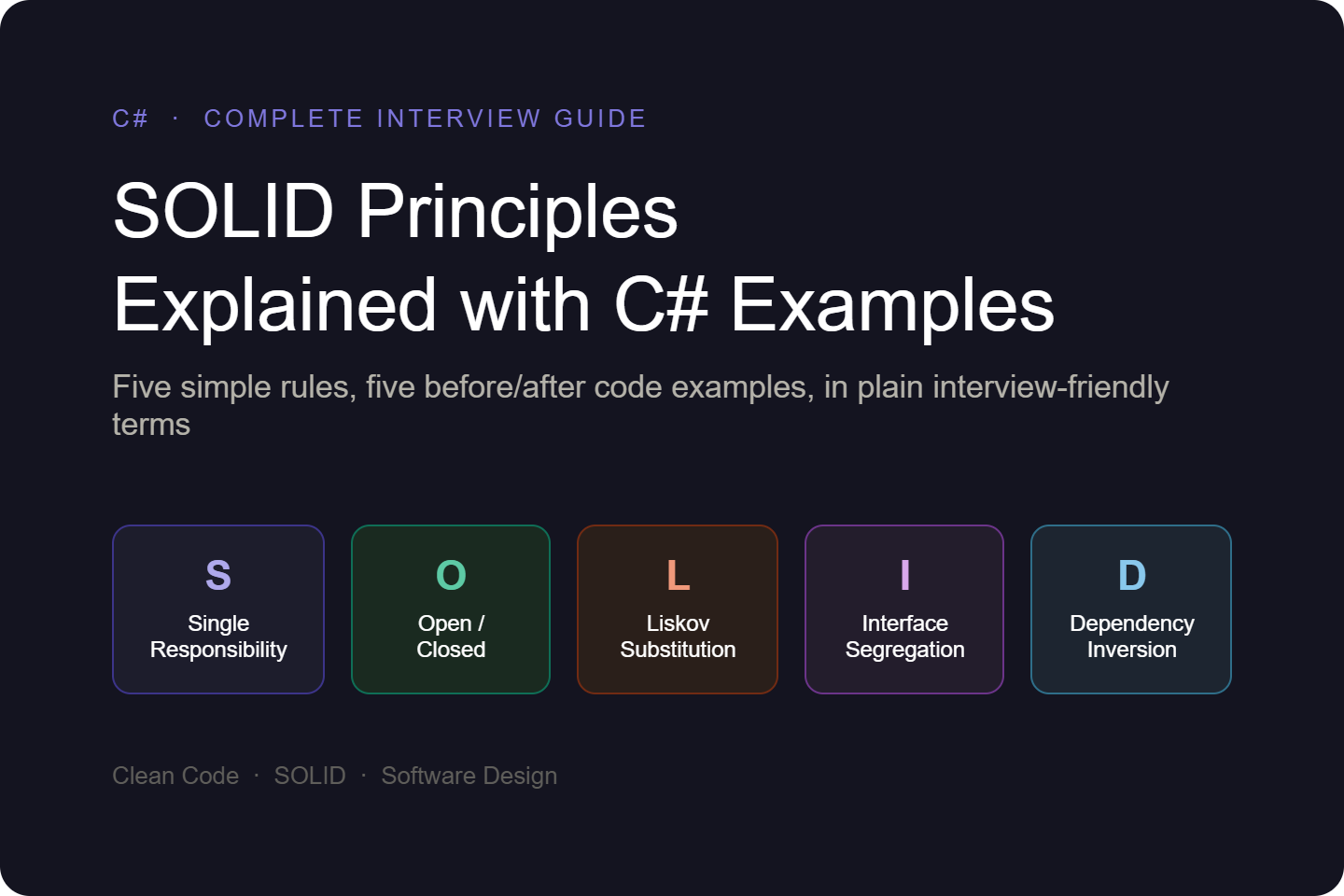
SOLID Principles Explained with C# Examples (Simple + Interview-Friendly)
Medium Issue #504
Still worth revisiting because most SOLID discussions are either too abstract or too dogmatic. Simple examples help.
-

SOLID Principles in C# – Part 5: The Dependency Inversion Principle (DIP)
C# Corner Issue #488
DIP articles are evergreen when they stay concrete.
-

SOLID Principles in C# – Part 2: The Open/Closed Principle (OCP)
C# Corner Issue #482
A straightforward OCP refresher. Good for newer developers who need examples of extension without rewriting stable code.
-
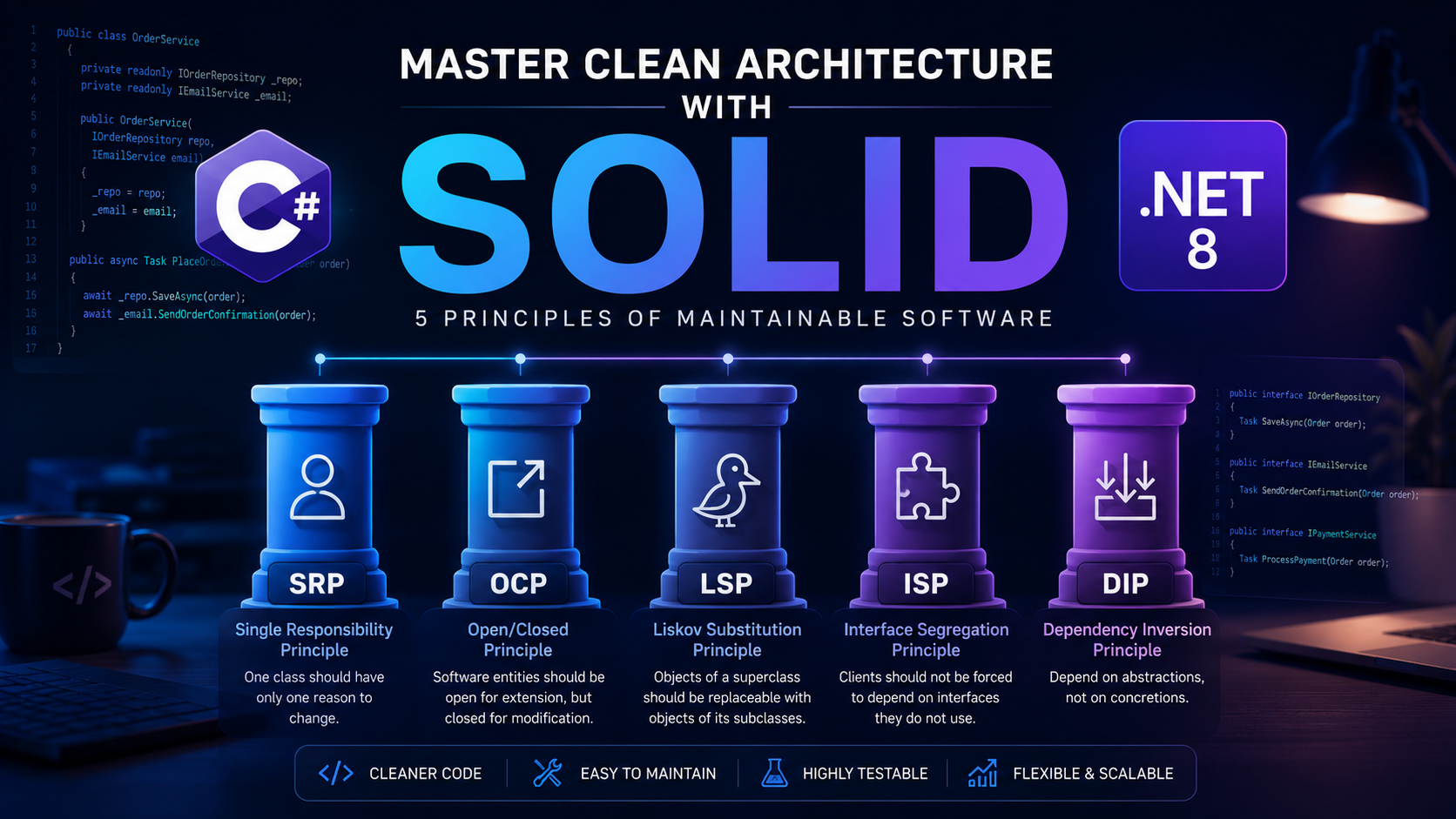
SOLID Principles Every .NET Developer Should Know
Medium Issue #481
A concise refresher on SOLID for developers who know the acronyms but need practical grounding.
-

SOLID Principles in C# — Real Enterprise Examples That Actually Make Sense
Medium Issue #475
SOLID lands better with enterprise examples than with abstract definitions, so this framing is the right one.
-

Mastering SOLID Principles in Software Design
csharp.com Issue #170
Good refreshers here too: SOLID, SRP, DI lifetimes, and performance posts that still pay off in real code.
-

Why Care About Agent Authored Code Quality
Ardalis.com on Ardalis (Steve Smith) Issue #491
Fast code generation does not excuse low standards. Still true, maybe more than ever.
-
Decorating Strategies: Adding Permission Checks Without Touching Business Logic
Medium Issue #486
A neat way to add authorization concerns without tangling core business rules.
Archive
Page 1 of 5
Newest first
-

3 Advanced .NET DI Tricks and Anti-Patterns Every Developer Should Master
Medium - Satyam Pushkar Issue #556
Setting up basic Dependency Injection (DI) in .NET is straightforward — register your abstractions in Program.cs and let constructor…
-

You’re Already Doing Most of SOLID.
Medium Issue #536
SOLID might be the most-written-about topic in software. I almost skipped it in my study plan for exactly that reason.
-

ASP.NET Core Architecture Patterns for High-Growth Software Products
Medium Issue #530
Most ASP.NET Core projects don’t fail because of bad code, they fail because of those architecture choices that made sense when the…
-
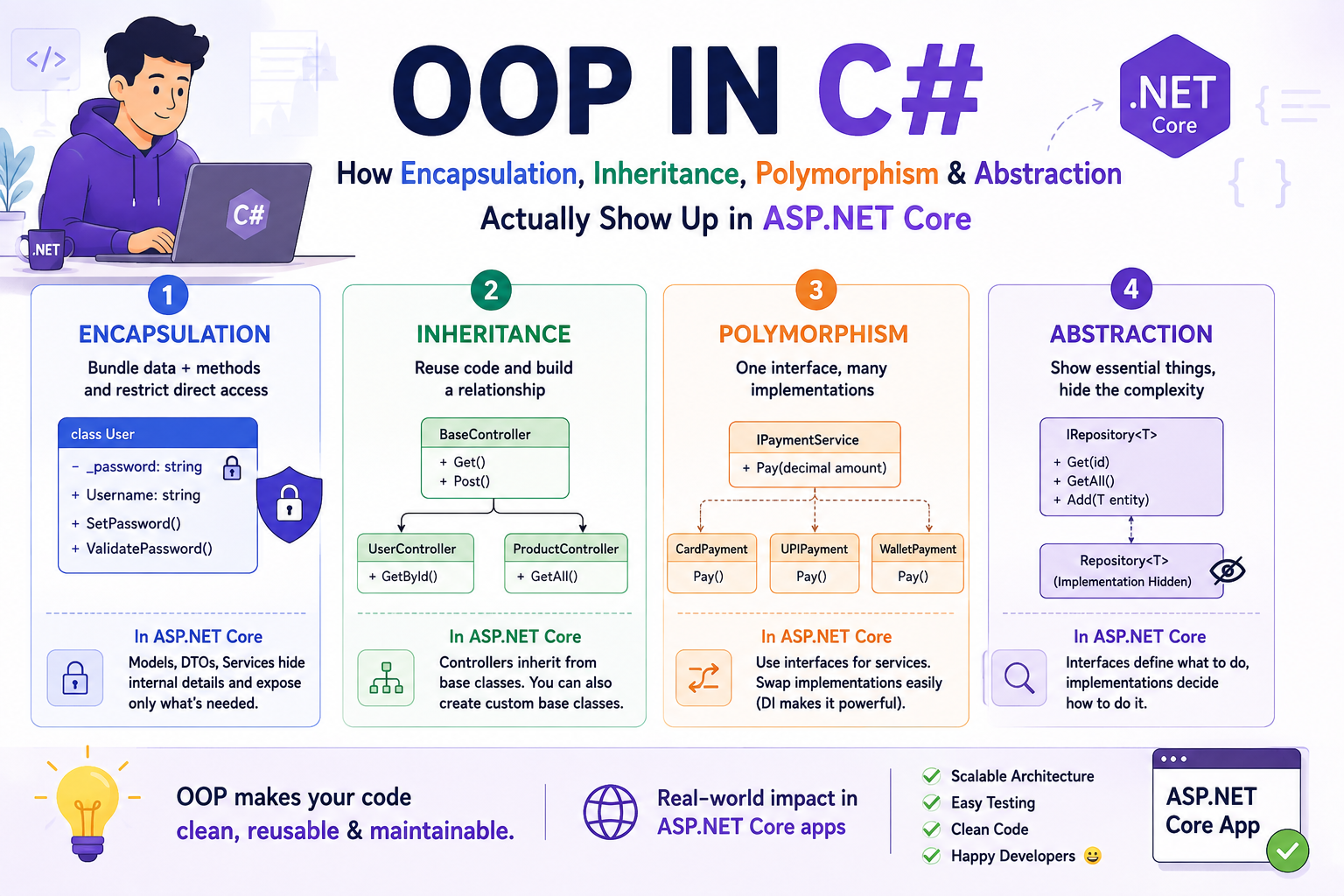
OOP in C#: How Encapsulation, Inheritance, Polymorphism & Abstraction Actually Show Up in ASP.NET
Medium Issue #525
Every C# developer can recite the four pillars of OOP in an interview. Fewer can point to where each one is actually doing work in a real…
-

Diving in OOP (Polymorphism and Inheritance – Part 3)
C# Corner Issue #523
Master C# polymorphism and abstract classes. Learn virtual, override, new, and base for dynamic binding and incomplete class definitions.
-
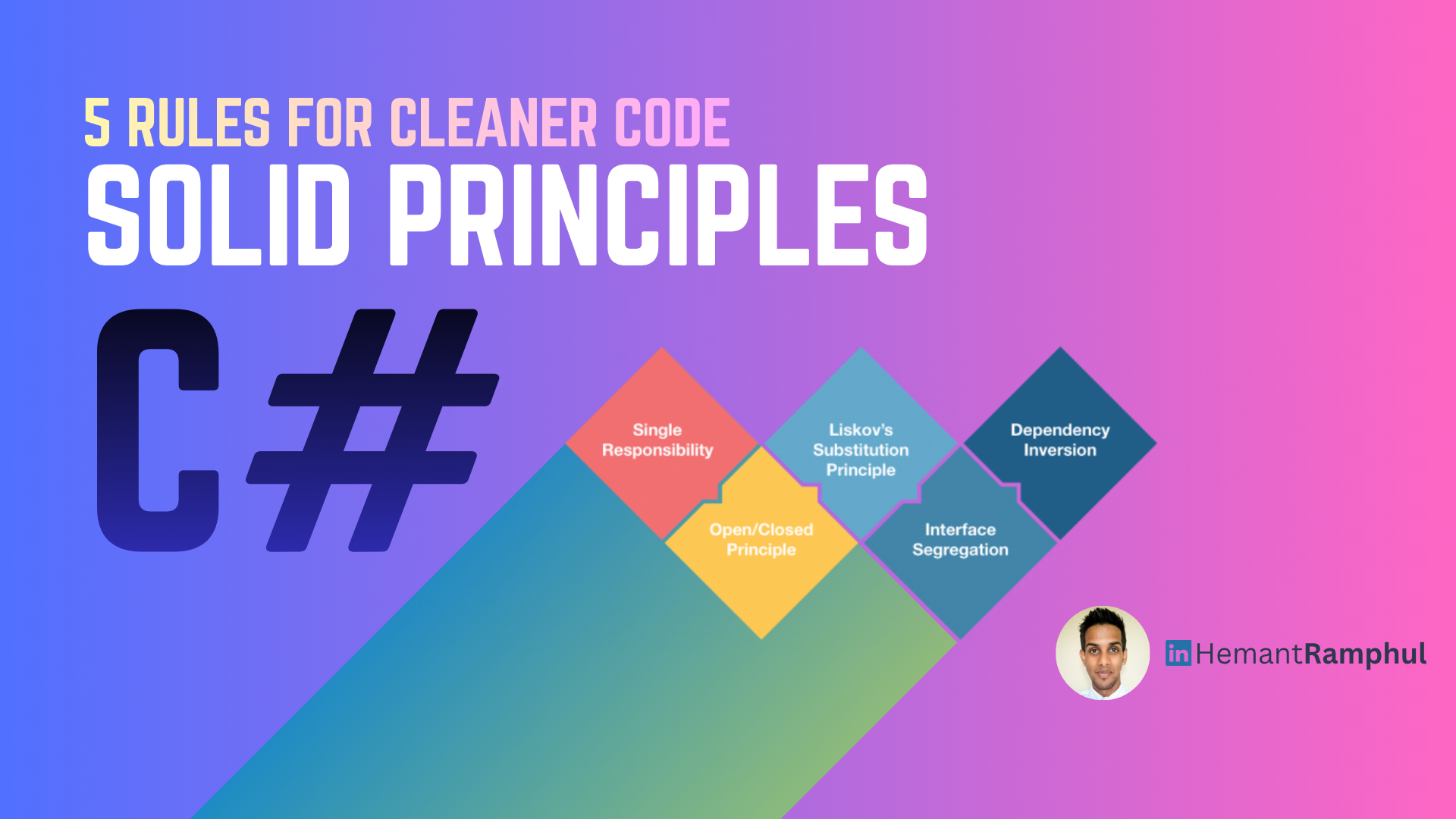
SOLID Principles in C#
Medium Issue #520
When a project is small, messy code still works. But as it grows, that mess starts to hurt because one small change breaks three other…
-
Understanding SOLID Principles in C#: Building Maintainable Object-Oriented Applications
C# Corner Issue #516
Master SOLID principles in C#: SRP, OCP, LSP, ISP, DIP. Learn to write clean, maintainable, and scalable object-oriented code.
-

Production Patterns for Multi-Agent Collaboration Using .NET and MCP
C# Corner Issue #516
Build scalable, production-ready multi-agent AI systems in .NET using MCP for standardized tool integration and decoupled execution.
-

SOLID Principles #2 — Open/Closed Principle (OCP)
Medium Issue #515
Imagine you’re building a payment system. At first, you only accept credit card payments — everything’s fine. A few months later, the…
-

SOLID Principles Explained: Open-Closed Principle (OCP) with C# Examples
Medium Issue #515
This principle conforms to the idea that classes, modules, functions, whatever you were writing before new functionality, should be open…
-

Temporal Coupling: What Is It and How to Deal With It
Medium Issue #513
Identifying Temporal Coupling and Refactoring It Step-by-step
-
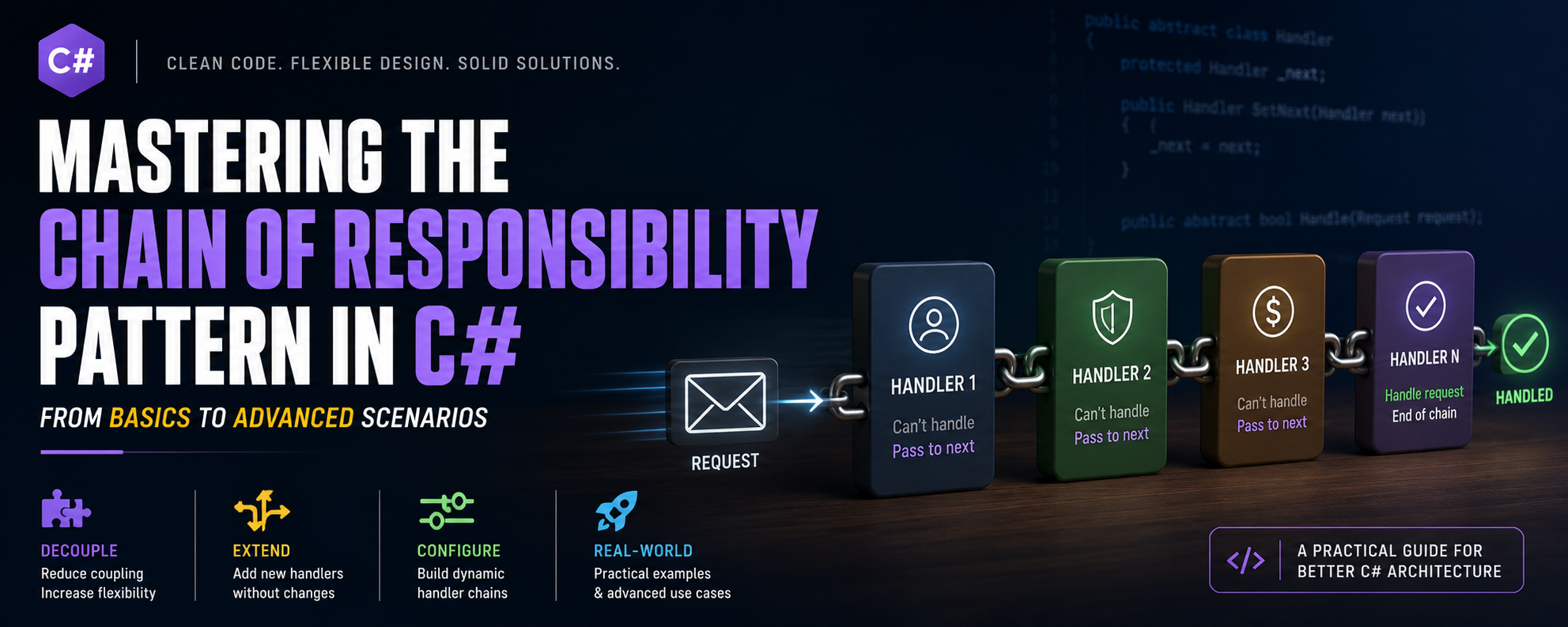
Mastering the Chain of Responsibility Pattern in C#: From Basics to Advanced Scenarios
Medium Issue #511
Learn how to implement the Chain of Responsibility pattern in C# with practical examples
-
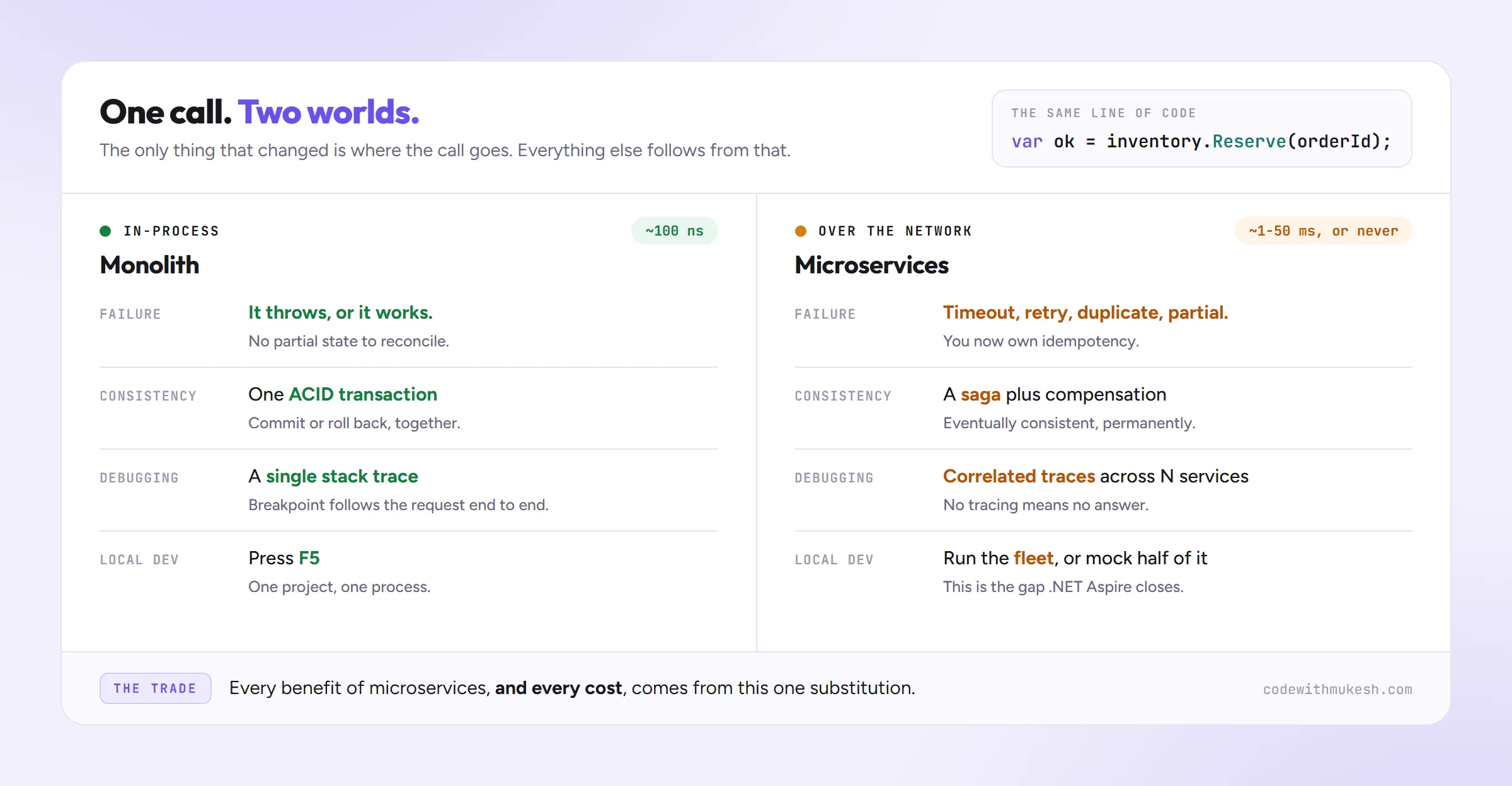
When to Use Microservices (And When Not To)
codewithmukesh Issue #510
A .NET architect's decision guide to microservices: what they actually solve, when to use them, when to avoid them, and why a modular monolith usually wins first.
-
Mastering the Strategy Pattern in Modern C#
C# Corner Issue #510
Tired of messy switch statements? Master the Strategy Pattern in C# for modular, testable, and SOLID-compliant code. Refactor your business logic!
-
The Day I Realised My Service Had Become a Monster
Medium Issue #506
It started with a simple request.
-
Interfaces in C#: The Complete Practical Guide Every .NET Developer Should Master
C# Corner Issue #505
Master C# interfaces: the contract that separates 'what' from 'how', enabling flexible, testable, and maintainable .NET applications.
-
SOLID Principles Explained with C# Examples (Simple + Interview-Friendly)
Medium Issue #504
Introduction
-

SOLID on .NET: From Spaghetti Code to Clean Architecture (Practical Refactoring)
Medium Issue #503
Whenever the topic of “SOLID” comes up, it’s common to see a flurry of abstract theoretical explanations. The problem is that, in the…
-
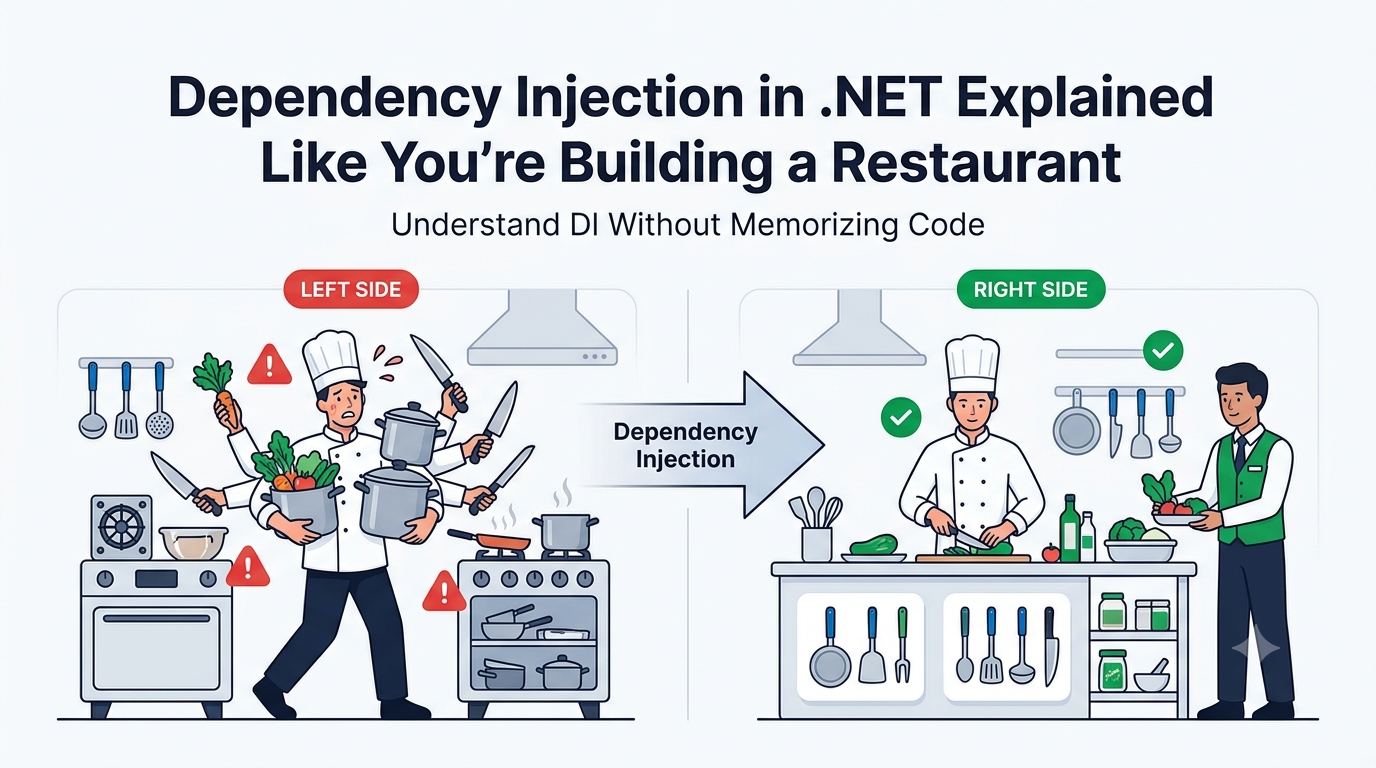
Dependency Injection in .NET Explained Like You’re Building a Restaurant
Medium Issue #500
One of the most important concepts in .NET — explained with a simple real-world analogy.
-

How SOLID Helped Me Delete Nearly 5,000 Lines of Code
Medium Issue #499
Every legacy codebase has one. The file nobody wants to open. The one that shows up in every merge conflict. The one everyone is just a…
-

-
12 C# OOP Concepts Every .NET Developer Must Know
Medium Issue #493
When developers begin learning C#, one of the first things they hear is:
-

DRY Principle in C#: Don't Repeat Yourself - A Practical Guide With Real Code Examples
C# Corner Issue #493
Master the DRY principle in C#: avoid duplicating knowledge, not just code. Learn practical examples and common pitfalls for robust software.
-
Why Care About Agent Authored Code Quality
Ardalis.com on Ardalis (Steve Smith) Issue #491
A developer I was chatting with recently raised a question I’ve been hearing more and more: Since we can produce code so fast now, does the code actually matter that much? Assuming the code fulf...
-
SOLID Principles in C# – Part 5: The Dependency Inversion Principle (DIP)
C# Corner Issue #488
Learn the Dependency Inversion Principle (DIP) in C#. Discover why high-level business logic shouldn't depend on low-level implementation details, and how to invert that dependency using abstractions.