performance
.NET Performance and Optimization Articles, Tutorials & News
.NET Performance and Optimization articles, tutorials, and news from the DotNetNews archive.
1624 articles Updated Page 7 of 65
Browse additional .NET Performance and Optimization articles from the DotNetNews archive.
.NET Performance and Optimization articles
Page 7 of 65
Newest first
-

Production Benchmarking of HTTP/3 vs HTTP/2 in ASP.NET Core 11
C# Corner Issue #516
Benchmark ASP.NET Core HTTP/3 vs HTTP/2 for production. Understand QUIC, latency, throughput, and resource metrics for informed protocol adoption.
-
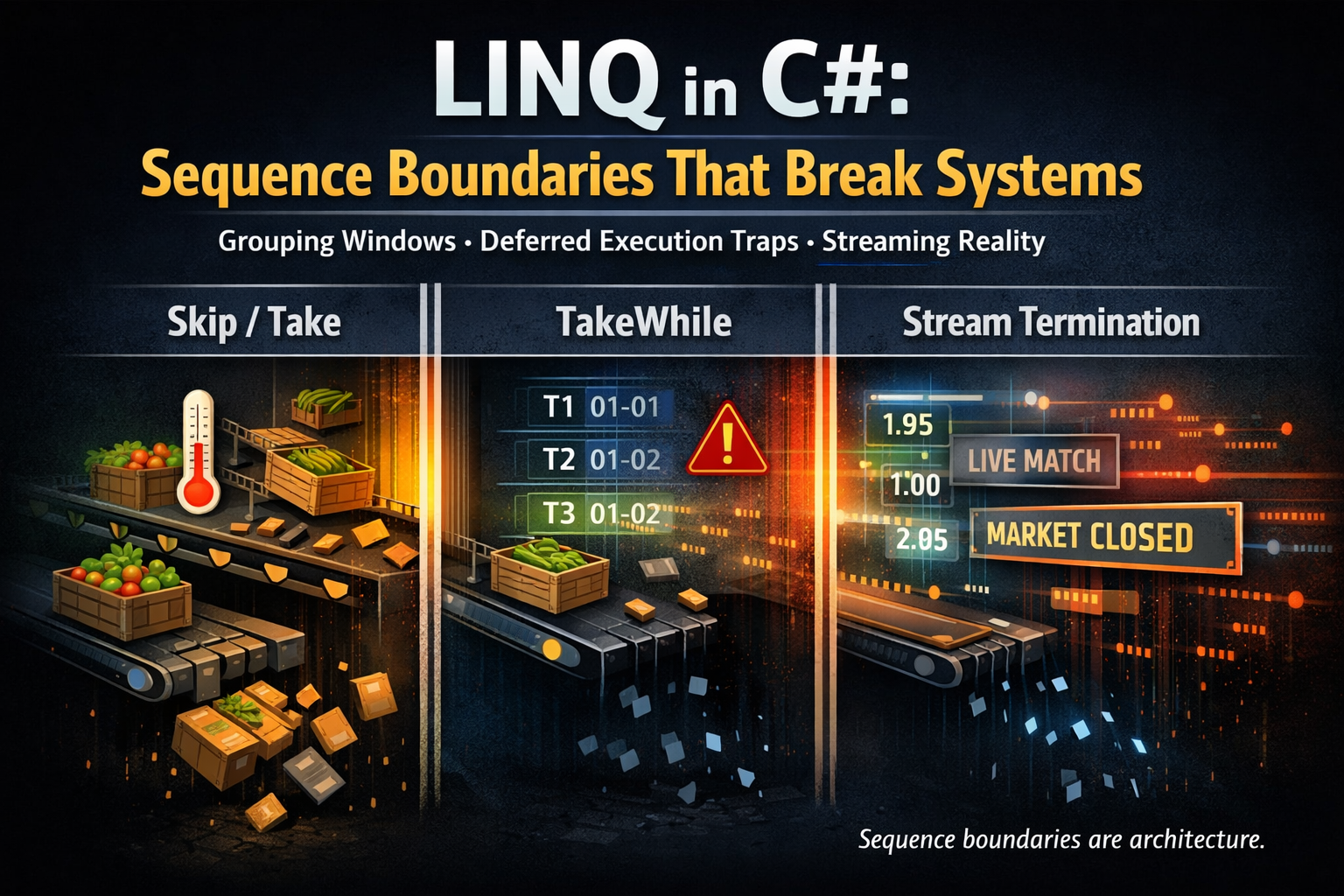
LINQ in C#: Sequence Boundaries That Break Systems
Medium Issue #516
Grouping Windows, Deferred Execution Traps, and Streaming Reality
-

Inside the .NET Garbage Collector: How Mark, Sweep, Compact, and Finalization Really Work in C#
C# Corner Issue #516
Understand the .NET GC's Mark, Sweep, Compact, and Finalization phases. Learn how it efficiently reclaims memory and keeps your C# apps running smoothly.
-

Make Your .NET Tests Insanely Faster
YouTube Issue #516
Get every Dometrain 30% off with code HANDSON30: https://dometrain.com/courses/?ref=nick-chapsas&promo=youtube&coupon_code=HANDSON30 Hello, everybody. I'm Nick, and in this video, I will talk about a ...
-
Web API Anti-Patterns That Break Production Applications
C# Corner Issue #515
Discover common .NET Web API anti-patterns that cause production outages and performance issues. Learn best practices for reliability and maintainability.
-

Distributed Caching in ASP.NET Core 10: Redis Performance Guide
C# Corner Issue #515
Boost ASP.NET Core 10 performance with Redis distributed caching. Learn patterns, best practices, and troubleshooting for faster, scalable apps.
-

Optimizing Entity Framework Core Performance with Compiled Queries and AsNoTracking
C# Corner Issue #515
Boost EF Core read performance! Learn to use AsNoTracking and Compiled Queries to slash overhead, reduce GC pressure, and speed up repetitive database calls.
-
High-Performance Background Processing with Channels in C#
C# Corner Issue #515
Master C# Channels for high-performance background processing. Improve API responsiveness, scalability, and reliability with async producer-consumer patterns.
-

API Rate Limiting in ASP.NET Core: Protecting Your Applications from Abuse
C# Corner Issue #514
Master ASP.NET Core API rate limiting to protect apps from abuse, ensure stability, and optimize resource usage with built-in middleware.
-
.NET 11 Performance Edition
Steven Giesel Issue #514
As always my yearly take on the latest .NET release. In a few months dotnet 11 will be released and I wanted to have a look into some performance metrics.
-

Benchmarking JSON Serialization Options in .NET 11
C# Corner Issue #514
Compare .NET JSON serializers: System.Text.Json, Source Generation, and Newtonsoft.Json. Benchmark for optimal performance.
-
Building Resilient HTTP Clients in ASP.NET Core with Polly
C# Corner Issue #514
Build resilient ASP.NET Core HTTP clients with Polly. Master retries, circuit breakers, timeouts, and fallbacks for robust API communication.
-
Efficient Pagination in ASP.NET Core: Offset vs Keyset Pagination Explained
C# Corner Issue #513
Master ASP.NET Core pagination: Offset vs. Keyset. Learn efficient strategies for large datasets, API performance, and better user experience.
-
Cancellation Tokens in ASP.NET Core: How to Cancel Long-Running Requests Correctly
C# Corner Issue #513
Master ASP.NET Core cancellation tokens to prevent resource waste on abandoned requests, boosting scalability and responsiveness.
-

Request Timeout Handling in ASP.NET Core 10: Preventing Slow Requests from Hurting Your Application
C# Corner Issue #513
Master ASP.NET Core 10 request timeouts to prevent slow requests from crashing your app. Learn configuration, policies, and cancellation for resilient APIs.
-
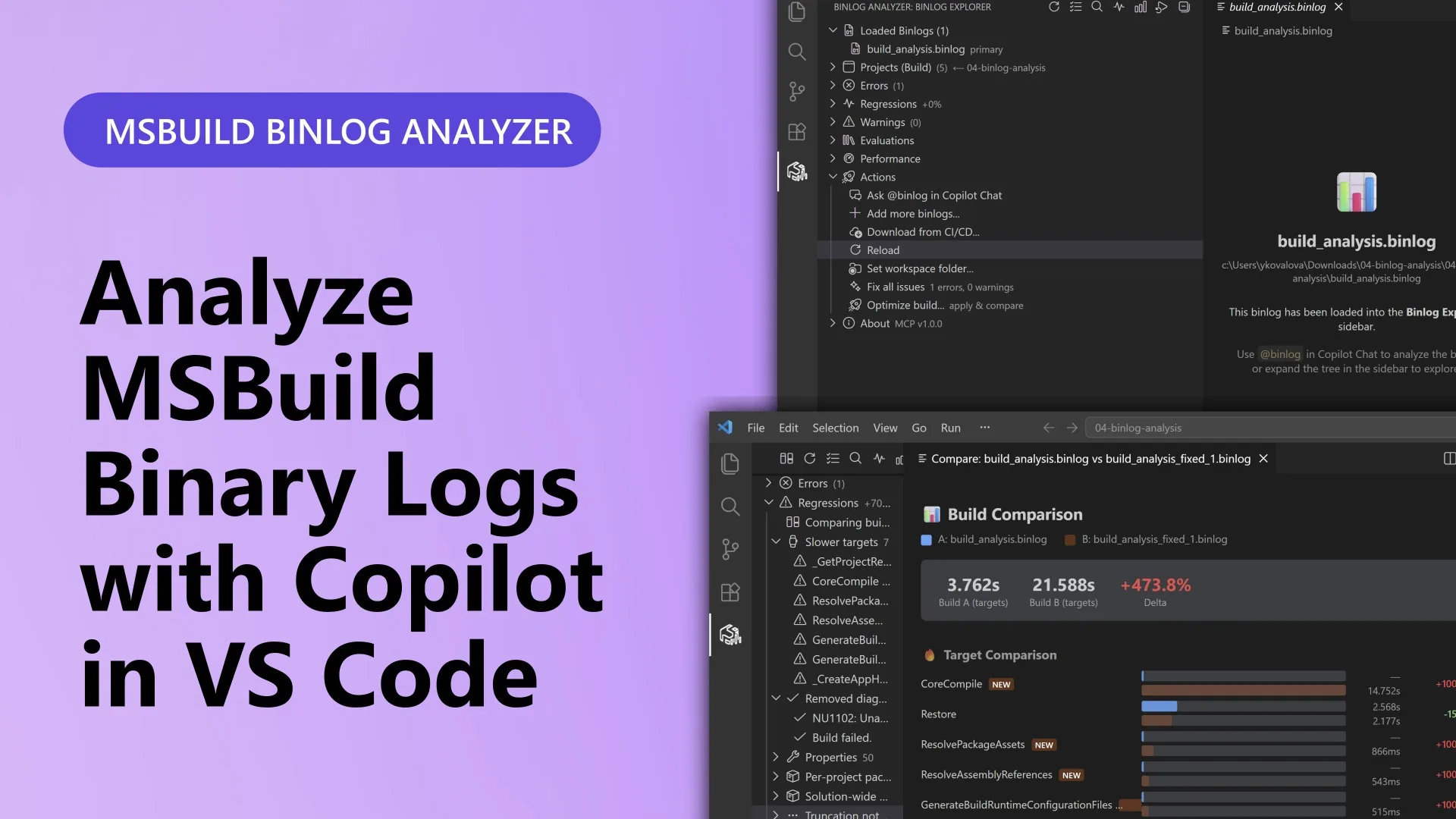
Analyze MSBuild Binary Logs with Copilot in VS Code
Microsoft Dev Blogs Issue #513
You know the moment. CI goes red, or a build that took 8 seconds yesterday now takes 40, and you're staring at a wall of MSBuild output trying to find the one line that matters. The answer is almost a...
-

Cache Me If You Can: A .NET Caching Survival Guide
Medium Issue #513
Caching is a fundamental part of modern applications, storing data locally or in a distributed manner so that our applications can be…
-
EF Core 10 Performance Tuning: Tracking, Query Filters, Compiled Queries, and Bulk Operations
C# Corner Issue #513
Boost EF Core 10 performance with AsNoTracking, query filters, compiled queries, and bulk operations. Optimize your data access layer.
-
Native AOT in .NET 10: When It Helps and When It Hurts
C# Corner Issue #513
Explore Native AOT in .NET 10: understand its benefits for faster startups & lower memory, and when it might hurt your apps.
-
Distributed Caching in ASP.NET Core: IMemoryCache vs IDistributedCache Explained
C# Corner Issue #512
Master ASP.NET Core caching! Compare IMemoryCache vs IDistributedCache for optimal performance, scalability, and data consistency.
-
Why ASP.NET Core APIs Slow Down Under Load (And How to Fix Them)
C# Corner Issue #512
Uncover why ASP.NET Core APIs slow down under load and learn practical fixes for bottlenecks like inefficient DB queries, blocking code, and middleware.
-
Output Caching vs Response Caching in ASP.NET Core: What's the Difference?
C# Corner Issue #512
ASP.NET Core: Output Caching vs. Response Caching. Understand the key differences, when to use each, and best practices for optimal performance.
-
ASP.NET Core 11 Request Pipeline Performance Deep Dive
C# Corner Issue #512
Optimize your ASP.NET Core app's performance by mastering the request pipeline. Learn middleware order, optimization, and benchmarking for faster APIs.
-
Optimizing Minimal APIs for High-Performance ASP.NET Core Applications
C# Corner Issue #512
Optimize ASP.NET Core Minimal APIs for peak performance. Learn techniques for efficient routing, JSON serialization, async programming, caching, and more.
-
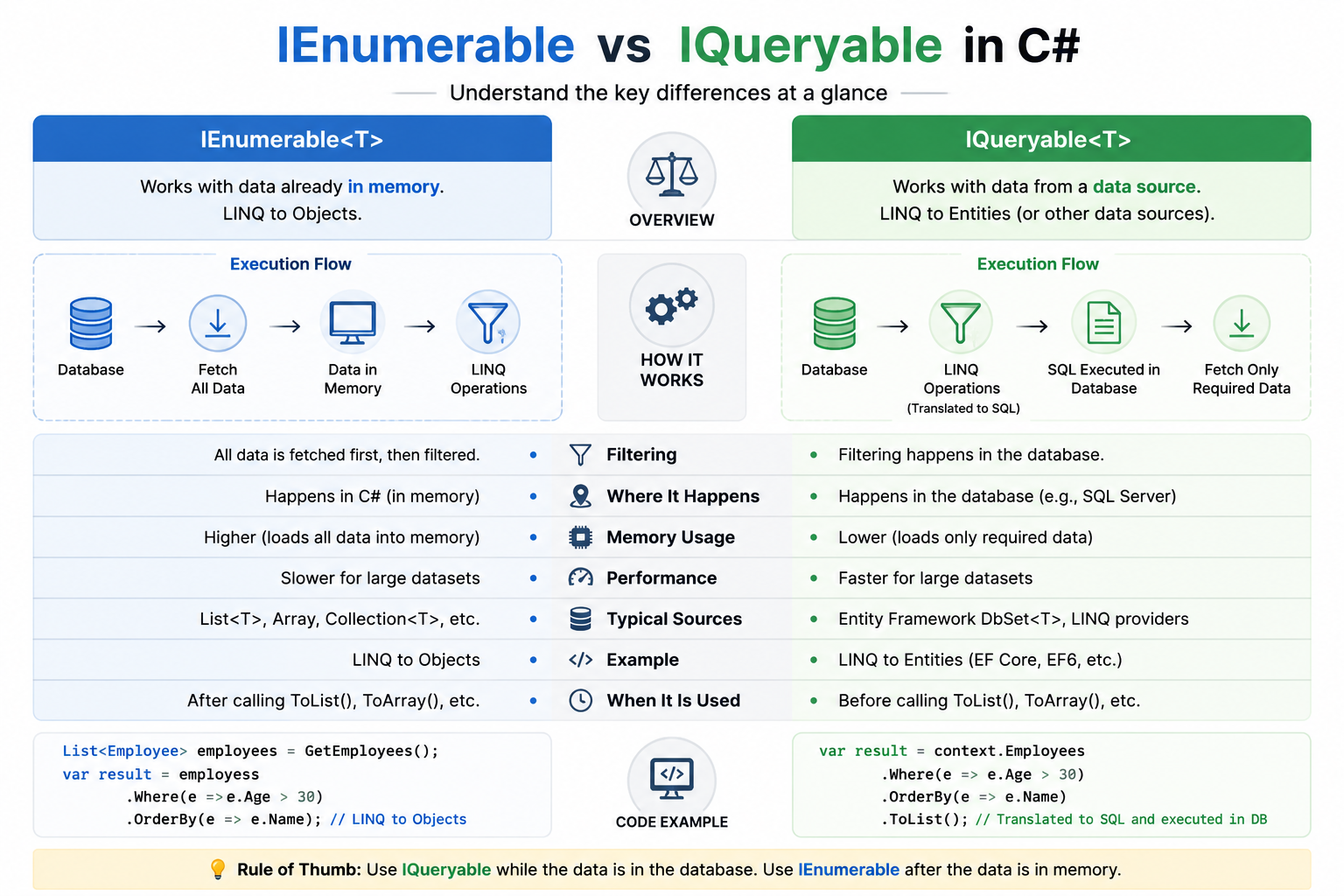
IQueryable vs IEnumerable in C# — The Difference Every .NET Developer Should Know
Medium Issue #511
If you’ve worked with LINQ or Entity Framework, you’ve almost certainly seen these two interfaces: